liveBook · Manning

Blameless postmortem

As explained in Shipping Go: Develop, deliver, discuss, design, and go again

A blameless postmortem is a structured review of an incident that seeks its root causes and process improvements without assigning personal blame.

A blameless postmortem turns a failed build, deployment, or production incident into a shared investigation. The team looks for root causes and process improvements without restricting people’s ability to contribute or pointing fingers. section 8.6

A useful review connects the incident to changes in the delivery system:

  • Give everyone a voice about technical problems, team dynamics, and possible improvements. section 8.6
  • Add pipeline checks, guards, and analysis before production, then make patching or rollback efficient. section 8.6
  • Make failures visible through alerts, resolve the build or deployment process, and continue work afterward. section 8.6

Failed deployment

A deployment fails and an alert reaches the team through email or Slack. Rather than identifying a culprit, the team examines what happened, restores service or redeploys a previous version, and improves the pipeline so the failure is less likely to recur. section 8.6

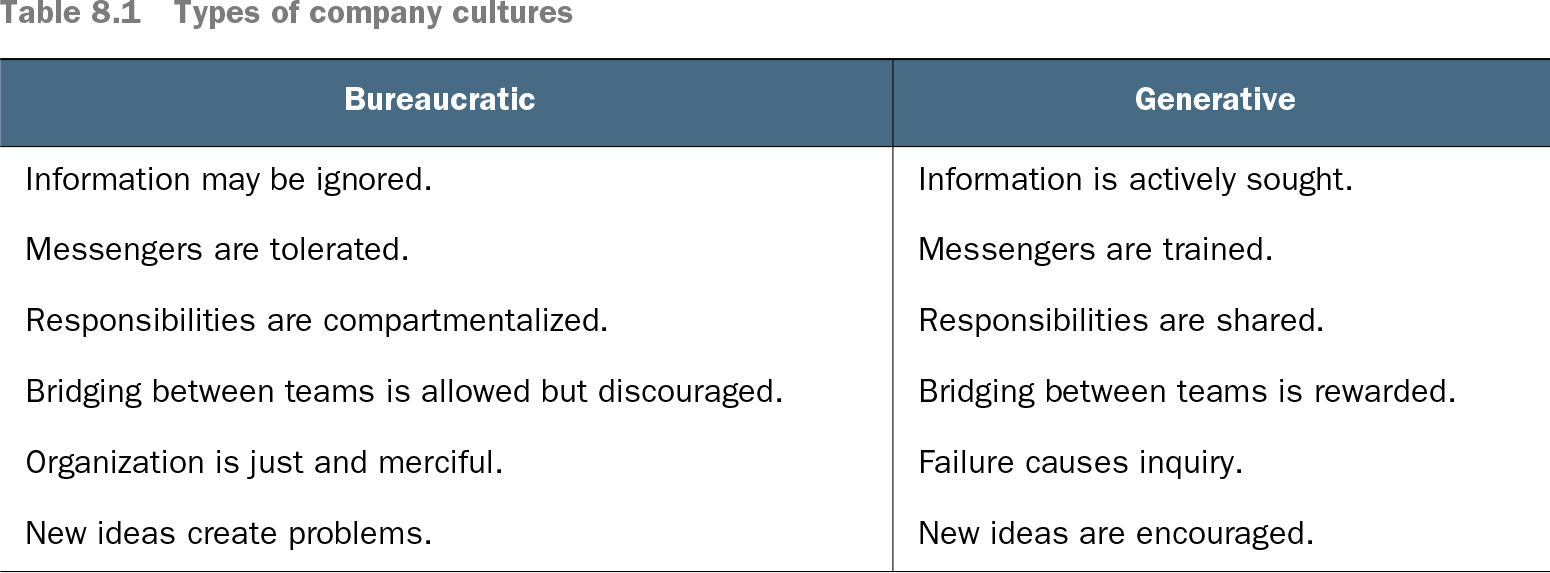
Table 8.1 Types of company cultures (view table figure)

Bureaucratic

Generative

Information may be ignored.

Information is actively sought.

Messengers are tolerated.

Messengers are trained.

Responsibilities are compartmentalized.

Responsibilities are shared.

Bridging between teams is allowed but discouraged.

Bridging between teams is rewarded.

Organization is just and merciful.

Failure causes inquiry.

New ideas create problems.

New ideas are encouraged.

The culture comparison links blameless review with actively seeking information, shared responsibilities, rewarded collaboration, and treating failure as inquiry. section 8.6

How Shipping Go: Develop, deliver, discuss, design, and go again covers it

How deep it goes
Connects review to root causes, alerts, pipeline safeguards, rollback, and metrics, but does not provide a formal meeting checklist.
Examples
Uses failed builds and deployments, email or Slack alerts, rollback, pipeline checks, and metrics for flaky tests and build failures.
What it assumes
Assumes a development team operating builds, deployments, and production pipelines; teaches shared accountability through failure review.
What you can do after
Diagnose/debug with a shared postmortem, identify process changes, and improve checks, visibility, recovery, or collaboration.
How it connects
Connects blameless postmortems with generative culture, continuous improvement, deployment pipelines, alerting, rollback, and process metrics.

Related concepts

This explainer was generated by Manning's knowledge graph from the text of Shipping Go: Develop, deliver, discuss, design, and go again. The section links point to the parts of the book it draws on.