A concept label identifies the concept represented by an object in an object-relation diagram. It functions like an object type: an object labeled Thing is an instance of Thing. The label occupies the upper compartment of the object box, above its settings. section 2.1
Use concept labels to distinguish object roles and navigate encoded AST data.
- Access the label of an encoded AST object through its concept property, as in rental.concept. section 3.2.1
- Keep the label conceptually separate from settings: settings store property values, while the label identifies the represented concept. section 2.1 section 3.2.1
- Treat label changes as structural changes that may require AST migration, such as changing Data Attribute to Attribute. section 10.3.2
Reading and changing a label
For an encoded rental object, rental.concept evaluates to 'Record Type'. During migration, an object whose concept is 'Data Attribute' can be renamed to 'Attribute', while its initial value setting is renamed to value. section 3.2.1 section 10.3.2
Figure 2.3 A simple ORD containing only one object, with annotations
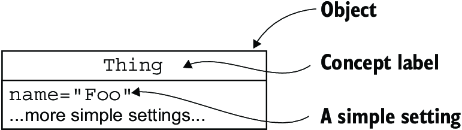
Annotated object notation shows the concept label in relation to the object’s settings. section 2.1
