liveBook · Manning

Boilerplate stripping

As explained in Grokking AI Algorithms, Second Edition

Boilerplate stripping is the removal of repetitive non-semantic material such as licensing text, markup, or website navigation from data.

Boilerplate stripping removes repetitive material that carries little meaning for the intended domain, such as licensing declarations, HTML tags, cookie-banner code, and website navigation menus. Removing it reduces token count and helps prevent a model from learning repeated, irrelevant patterns. section 11.7

A small cleaning step

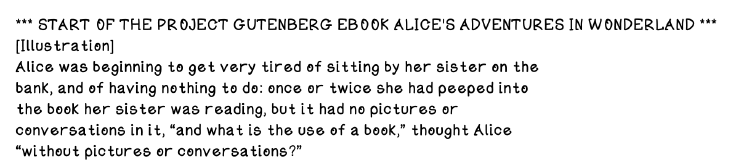
Start with an excerpt of training text containing two lines unrelated to the story. Identify those lines as boilerplate, remove them, and retain the meaningful narrative. The cleaned result contains less noise and fewer tokens. section 11.7

Figure 11.10 Excerpt of training data from Alice’s Adventures in Wonderland
11_10

Compare the original training-data excerpt with the version showing boilerplate removed. section 11.7

How Grokking AI Algorithms, Second Edition covers it

How deep it goes
Defines the noise and explains its benefits with a small example, but stops short of implementation procedures or detection algorithms.
Examples
Uses licensing text, HTML tags, cookie banners, navigation menus, and two irrelevant lines in a story excerpt.
What it assumes
Assumes familiarity with training data and tokens while explaining boilerplate content from basic examples.
What you can do after
Apply boilerplate stripping to reduce token size and limit learning from repeated irrelevant patterns.
How it connects
Connects to language filtering, near-duplicate removal, safety and compliance filters, tokenization, and data quality.

Related concepts

This explainer was generated by Manning's knowledge graph from the text of Grokking AI Algorithms, Second Edition. The section links point to the parts of the book it draws on.