Budgeting plans and controls project spending by aligning business goals, staffing, resources, and costs with expected outcomes. section 2.2.4 section 12.3.1
Practical budgeting combines several responsibilities:
- Estimate required resources using historical costs, previous estimates, actual work, lessons learned, and risk assessments. section 12.3.1
- Prioritize spending that contributes directly to critical project outcomes, including cost-effective technologies and open source tools. section 12.3.1
- Reserve 10% to 20% for unexpected expenses or scope changes, adjusting the contingency to project complexity and risk. section 12.3.1
- Track planned spending, actual costs, and resource usage with shared spreadsheets or project management tools. section 12.3.1
Using project history to improve a budget
A reusable enterprise web-development prototype gave one agency comparable past projects. Comparing original estimates with actual work, then incorporating lessons learned and turnover risks, improved resource estimates and the project burn-down rate. section 12.3.1
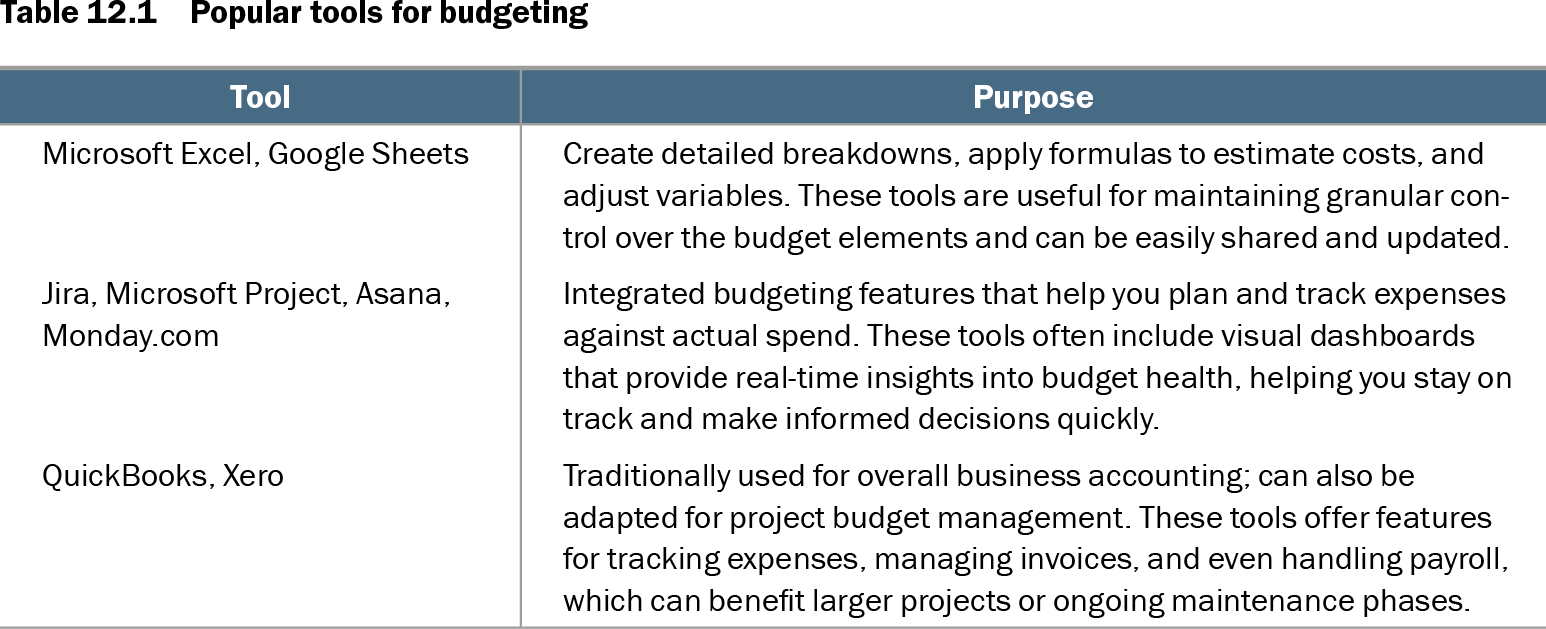
Table 12.1 Popular tools for budgeting (view table figure)
| Tool |
Purpose |
|---|---|
| Microsoft Excel, Google Sheets |
Create detailed breakdowns, apply formulas to estimate costs, and adjust variables. These tools are useful for maintaining granular control over the budget elements and can be easily shared and updated. |
| Jira, Microsoft Project, Asana, Monday.com |
Integrated budgeting features that help you plan and track expenses against actual spend. These tools often include visual dashboards that provide real-time insights into budget health, helping you stay on track and make informed decisions quickly. |
| QuickBooks, Xero |
Traditionally used for overall business accounting; can also be adapted for project budget management. These tools offer features for tracking expenses, managing invoices, and even handling payroll, which can benefit larger projects or ongoing maintenance phases. |
Compare spreadsheet, project-management, and accounting tools by their budgeting, tracking, dashboard, invoicing, and payroll capabilities. section 12.3.1