A build-and-buy strategy combines internally developed capabilities with purchased or managed marketing technologies. It focuses internal effort on high-leverage first-party-data needs while using mature products for capabilities that require scale, integrations, compliance, monitoring, or support. section 4.1
Use the strategy to divide responsibilities across three connected capabilities:
- Collect first-party data securely, scalably, and compliantly. section 4.1
- Manage and combine datasets into unified customer profiles, including identity resolution. section 4.1
- Activate targeting and personalization data across channels and platforms. section 4.1
- Buy where mature vendors provide monitoring, uptime guarantees, and round-the-clock operational support; build where internal expertise creates the most leverage. section 4.1
Startup with limited engineering capacity
A startup may lack the team to build a first-party-data solution from scratch, so it can purchase mature collection, management, or activation capabilities while developing differentiated internal functions. section 4.1
Figure 4.1 Components of modern marketing technology solutions for first-party data: collect, manage, activate
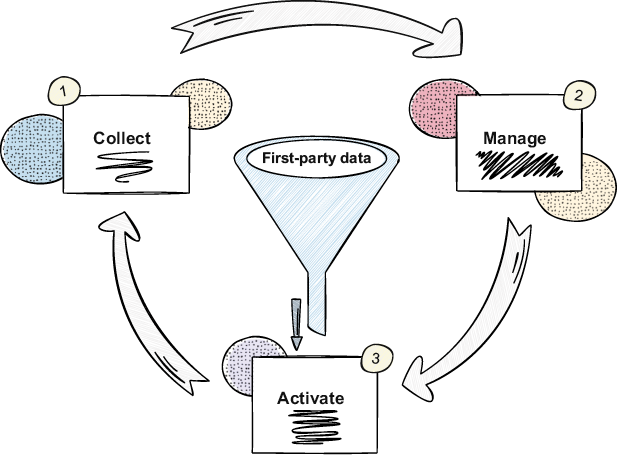
Map build-and-buy decisions against the collect, manage, and activate components of a first-party-data solution. section 4.1
