The builder pattern constructs a struct through a separate, fluent object. Instead of supplying many values at once, start with `builder()`, set fields through chained methods, then call `build()` to create the finished value. It is useful when structs require multiple parameters and hand-written builders would repeat boilerplate. section 6.0 section 6.9
A generated builder can store each incoming field as `Option<T>`. `builder()` initializes every slot to `None`; each setter saves `Some(input)` and returns the builder; `build()` reads the saved values to initialize the original struct. The initial implementation reports an unset required field during `build()`. section 6.4.2
Fluent construction
For a struct with `roots_of: String`, a builder call can read `Gleipnir::builder().roots_of("mountains".to_string()).build()`. The result contains the supplied value, and a black-box test can verify that public behavior without depending on macro internals. section 6.4.2 section 6.9
A derive macro can generate the helper builder without changing the original struct. It inspects named fields, emits storage, setters, `build()`, and the associated `builder()` function. This keeps the public construction API while automating repetitive implementation work. section 6.0 section 6.4.2
For stricter required-field handling, type state can make incomplete construction unbuildable. The builder carries a generic marker representing the next required field; each setter returns a builder with the next marker, and only the final marker specialization exposes `build()`. Omitting a field then becomes a compile-time missing-method error. section 8.5.2
Figure 8.6 Desired situation: illegal states are unrepresentable. We generate a struct with a different generic type parameter for every method, only allowing the last one to call build.
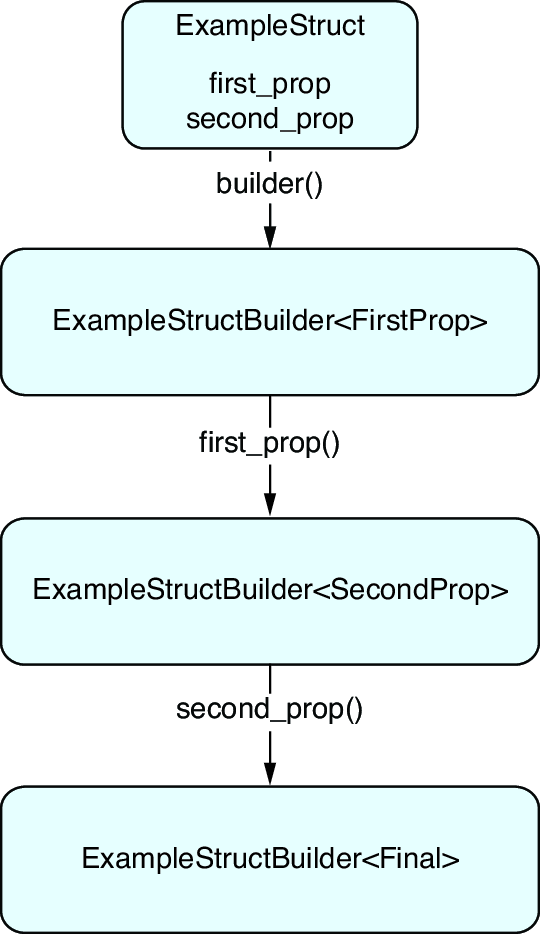
This diagram captures the type-state progression: distinct generic builder states allow `build()` only after the final required setter. section 8.5.2





