liveBook · Manning

Bus system

As explained in Learn Concurrent Programming with Go

A system bus is a communication pathway that transfers requests and data between processors, caches, and main memory.

A system bus is the shared communication pathway processors use to read from and write to main memory. In a multithreaded program, it helps processors exchange data through shared memory. section 3.1

A shared bus creates several practical effects:

  • A processor waits until the bus is idle, places a memory request, and listens for the reply. section 3.1
  • As processor counts increase, bus traffic increases and can limit further scaling. section 3.1
  • Caches reduce traffic by keeping recently used memory closer to the processor, allowing many reads without returning to main memory. section 3.1
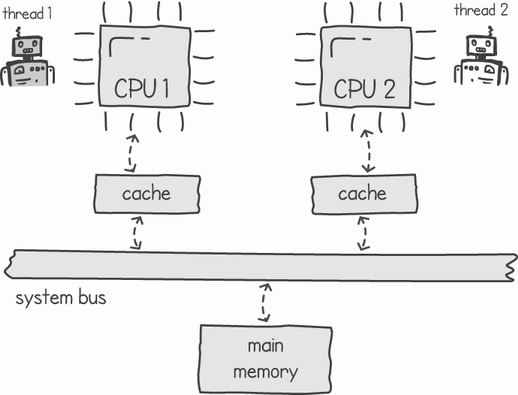
Figure 3.2 Bus architecture with two CPUs and one cache layer

Use the two-processor architecture diagram to trace bus access, caching, and the shared-memory path. section 3.1

How Learn Concurrent Programming with Go covers it

How deep it goes
Explains bus arbitration, memory requests, scaling bottlenecks, and cache-based traffic reduction without detailing cache coherence.
Examples
Uses a two-CPU, one-cache-layer architecture and traces a thread reading a variable from main memory.
What it assumes
Assumes basic awareness of processors, threads, and memory while situating their communication in hardware architecture.
What you can do after
Evaluate how processor count and caching affect shared-memory performance and system-bus contention.
How it connects
Connects processors, caches, main memory, multithreading, and memory sharing through a shared communication path.

Related concepts

This explainer was generated by Manning's knowledge graph from the text of Learn Concurrent Programming with Go. The section links point to the parts of the book it draws on.