A business problem is a need, objective, task, journey, process, constraint, or challenge affecting users, stakeholders, or an organization. Understanding it should precede proposing software features, because software increasingly shapes how organizations operate and compete. section 2.1
Business problems can appear as:
- Customer needs, such as going to the movies with friends or becoming immersed in a movie. section 2.1
- Journey goals and tasks, such as purchasing tickets, reserving seats, or finding the best available seats. section 2.1
- Organizational goals and pain points, such as automated weekly sales reporting, declining ticket sales, or corrupted forecasting data. section 2.1
BigScreen’s extended-movie conversation
Stakeholders explore how movies might be extended using EventStorming. Visualizing the conversation exposes different mental models, supports shared understanding, and lets the group test scenarios and edge cases before committing to a solution. section 2.1.2
Figure 2.1 Visualization of the conversation with the business stakeholders at BigScreen on extending movies using EventStorming. domain events are business-relevant events that happen in a conversation. We’ll go more in-depth on how EventStorming works later in the chapter.
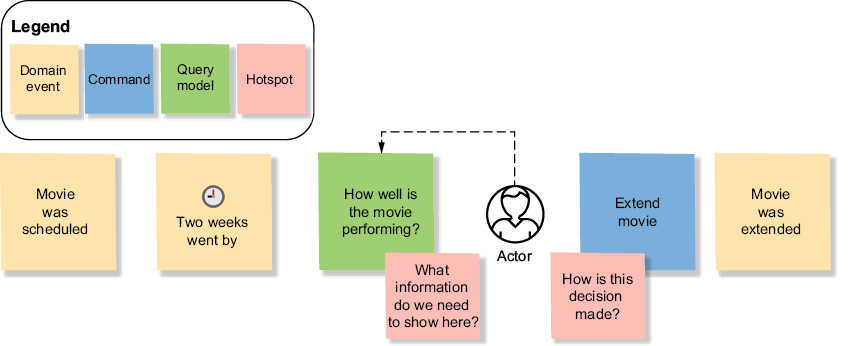
Use the visualization to follow how stakeholders model a business problem through domain events during collaborative exploration. section 2.1.2



