Canon II requires cybersecurity professionals to act honorably, honestly, justly, responsibly, and legally. It calls for integrity in professional decisions and compliance with applicable laws and regulations. section 18.5.2
Consider intent, impact, and lawful conduct when applying the canon:
- Fake accounts are not inherently unethical, but using them to impersonate, mislead, or phish violates the canon. section 18.5.3
- Using a competitor’s public information can be ethical when obtained lawfully and without deception; using confidential or improperly obtained information crosses ethical and legal boundaries. section 18.5.3
- A suspected Canon II violation involving an ISC2 member may be reported by any individual or organization through an appropriate channel. section 18.5.4
Figure 18.2 Summary of ISC2 Canons and their main goals
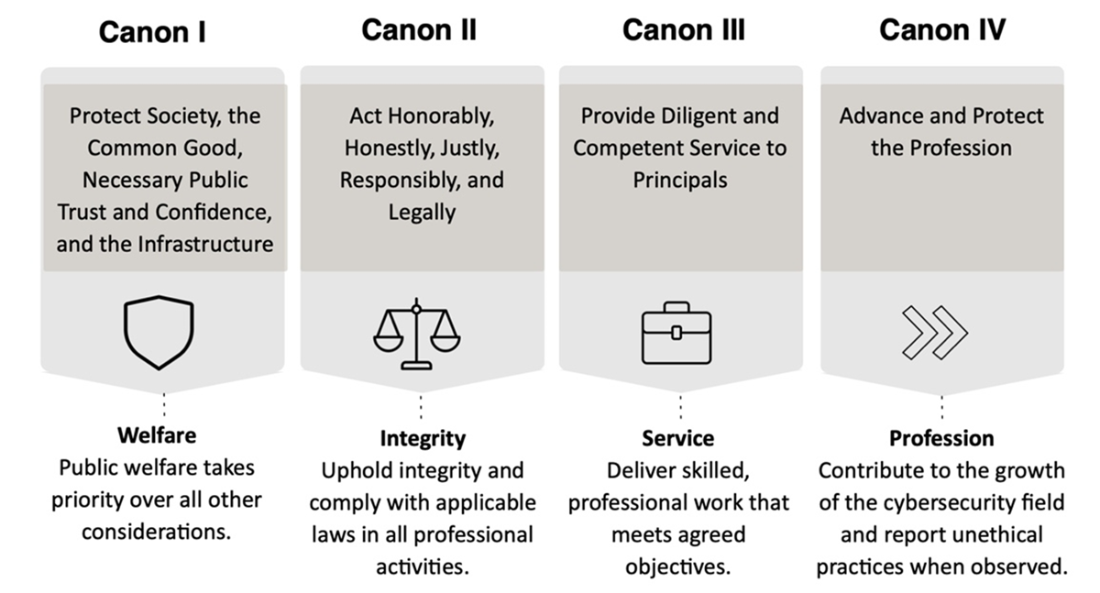
The summary figure places Canon II alongside the other canons, which helps distinguish its ethical duties from their goals. section 18.5.2
