The CAP theorem describes a fundamental distributed-systems trade-off: when a network partition occurs, a data store must choose between consistency and availability. Partition tolerance is essential because network instability is inevitable. section 6.2 section 6.0
The three CAP properties mean:
- Consistency means every read returns the most recent write or an error; here, consistency specifically means linearizability. section 6.2
- Availability means every request receives a non-error response, even when the response may contain outdated data. section 6.2
- Partition tolerance means continuing to operate correctly when communication between nodes is lost or delayed. section 6.2
During a partition, systems commonly make one of these choices:
- CP preserves the most recent value but may reject or fail requests during the partition. section 6.2
- AP continues responding during the partition but may return stale data. section 6.2
- CA can provide consistency and availability only when partitions are absent; it is not viable when network instability must be tolerated. section 6.2
A network partition
Suppose communication between database nodes is dropped or delayed. A CP design refuses some requests to avoid serving stale data; an AP design keeps serving requests while accepting that replicas may disagree temporarily. section 6.2
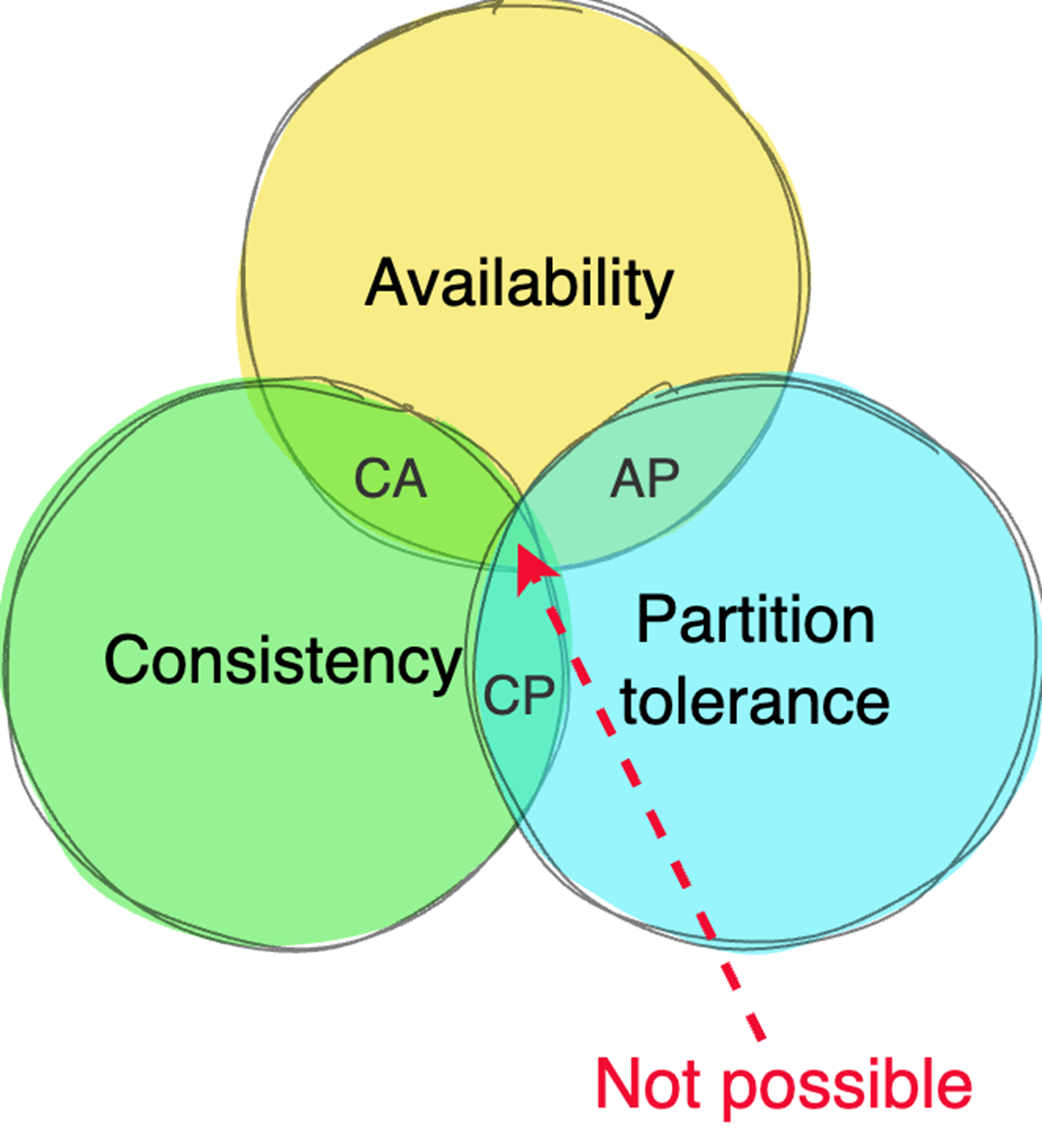
Use the figure to compare consistency, availability, and partition tolerance and to locate the CP, AP, and CA trade-offs. section 6.2






