A platform capability is a platform-provided function that hides infrastructure and operational complexity behind a simpler developer-facing interface. Teams consume it through stable APIs while platform teams configure and evolve the underlying components. section 7.0 section 7.2
Capabilities move recurring distributed-application concerns out of service code. Standard HTTP or gRPC interfaces can handle data storage, messaging, credential stores, resiliency policies, and feature flags without vendor-specific dependencies. section 7.2 section 7.4
A capability-oriented platform enables teams to:
- Choose shared services according to application needs while the platform team manages their infrastructure and configuration. section 7.2
- Upgrade or replace underlying components without requiring application-code changes. section 7.0 section 7.2
- Adopt standardized practices while releasing and upgrading services at each team’s own pace. section 7.2
- Use consistent capabilities across local, development, and production environments to reduce the path to production. section 7.4
Conference application
A walking-skeleton Conference application can call platform APIs for state, messaging, credentials, and resiliency instead of embedding infrastructure dependencies. Dapr can provide these distributed-application capabilities while the platform team wires different implementations behind the same interfaces. Feature flags can keep completed features released but hidden until product teams choose to expose them. section 1.4.3 section 7.4
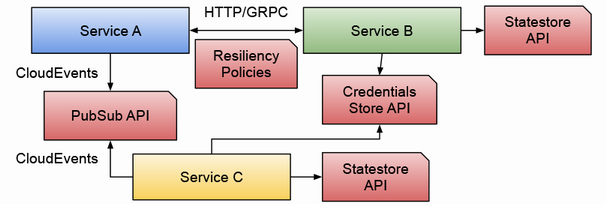
Use the API view to trace how application services consume platform capabilities without depending directly on infrastructure components. section 7.2






