liveBook · Manning

Central limit theorem sampling

As explained in Optimization Algorithms: AI techniques for design, planning, and control problems

A sampling method that approximates a normal distribution by generating means of sufficiently large samples.

Central limit theorem (CLT) sampling generates candidate values from sample means. As sample size increases, those means approximate a normal distribution regardless of the population’s distribution, making CLT sampling useful for initializing population-based metaheuristics. section 7.1

Python implementation

Choose a sample size N, repeatedly draw N binary random values, compute each sample mean, center it around zero, and scale it by 2√N. Generate separate coordinate lists to form candidate points. section 7.1
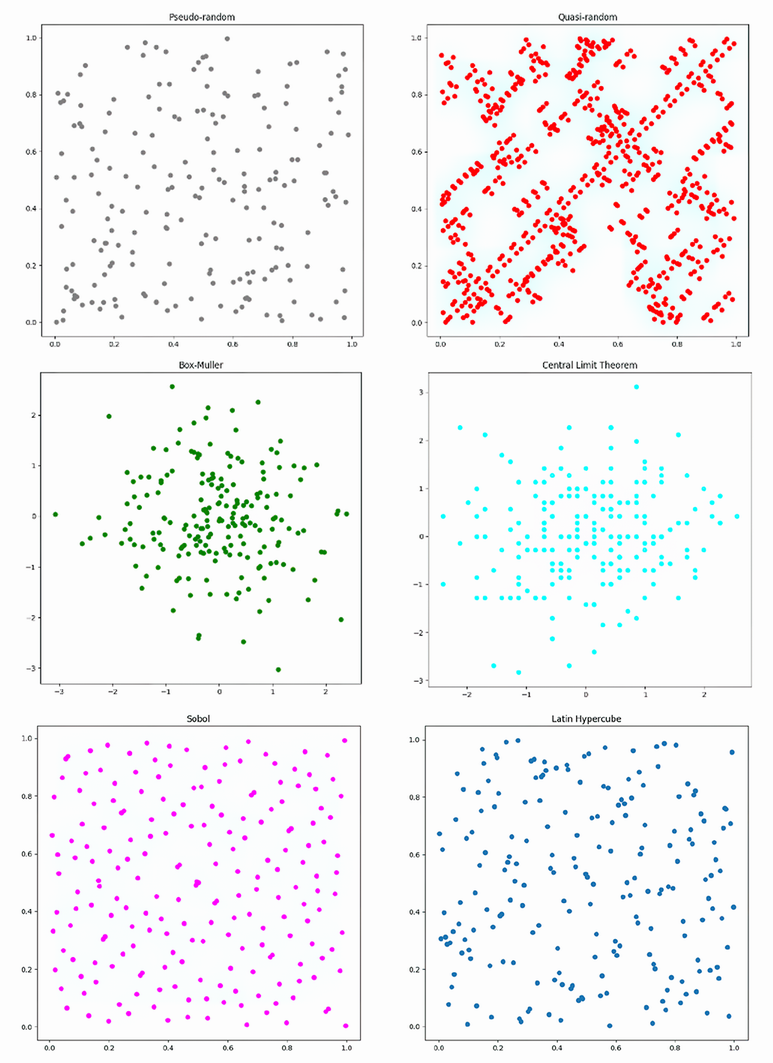
Figure 7.2 Sampling methods for generating an initial population

Compare CLT-generated points with pseudo-random, quasi-random, Box–Muller, Sobol, and Latin hypercube sampling when evaluating initial-population diversity. section 7.1

How Optimization Algorithms: AI techniques for design, planning, and control problems covers it

How deep it goes
Implements sample-mean generation in Python and compares its distribution visually with alternative sampling methods.
Examples
Uses Python’s random module to generate two-dimensional CLT samples and plots them beside five alternative samplers.
What you can do after
Apply it via Python to generate normally distributed candidate coordinates for an initial metaheuristic population.
How it connects
Contrasts with Box–Muller sampling, quasi-random sequences, Sobol sampling, Latin hypercube sampling, and pseudo-random initialization.

Related concepts

This explainer was generated by Manning's knowledge graph from the text of Optimization Algorithms: AI techniques for design, planning, and control problems. The section links point to the parts of the book it draws on.