End-to-end engineering optimization assesses and improves the complete process for building, delivering, and operating software. It measures engineering quality and developer experience across the full lifecycle rather than optimizing isolated activities. section 2.1.3 section 3.2
Use the complete lifecycle as the optimization boundary:
- Trace work from ideation and planning through development, delivery, support, and operations. section 2.1.3 section 3.2.1
- Include cross-team dependencies, waiting time, planning overhead, meetings, and infrastructure provisioning in the analysis. section 3.2.1
- Prefer improvements that reduce friction across boundaries instead of maximizing the local performance of functional silos. section 3.2 section 3.2.1
Platform engineering scenario
A domain-focused team should be able to build, test, release, operate, and evaluate a product without avoidable cross-team delays. A value-stream map might reveal that infrastructure requires 30 days, while planning overhead and uncertain requests add further lead time. The platform scope therefore includes the full path to production, even if implementation begins with only selected capabilities. section 2.1.3 section 3.2.1
Figure 2.4 Look at all the activities, from ideation to operations, and assess engineering quality and effects from organizational or architectural decisions. Yrjö Engeström’s human activity model inspires this developer activity model [1].
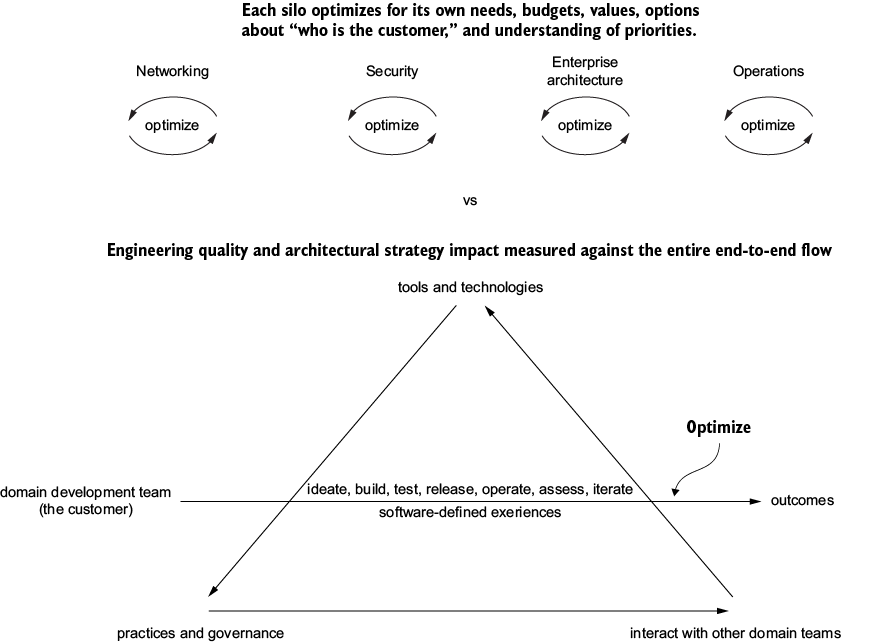
Use the activity model to inspect how organizational and architectural decisions affect developer work from ideation through operations. section 2.1.3
Figure 3.4 A sample VSM for software delivery, mapping steps from planning to support and highlighting delays or bottlenecks. The times shown should account for all tasks or meetings, using averages for recurring items such as quarterly reviews.
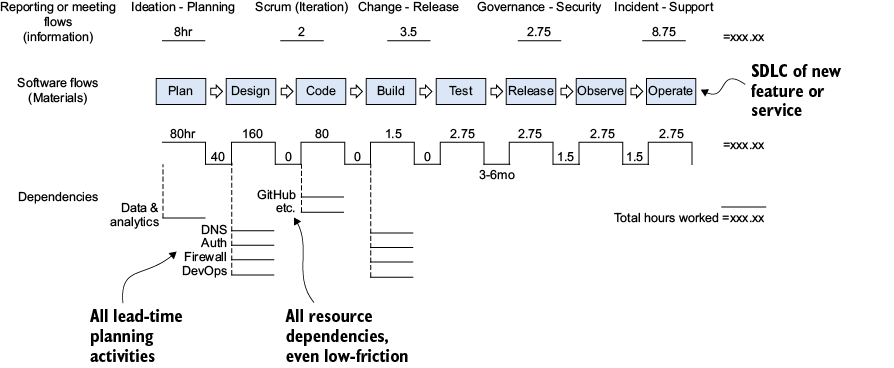
Use the value-stream map to locate delivery steps, delays, bottlenecks, recurring meetings, and support work across the software lifecycle. section 3.2.1
