An integrations API is a lightweight control-plane service that maintains authorization-related configuration in external tools or systems when the regular identity provider cannot provide the required experience. It extends a unified platform access model beyond the primary platform team. section 8.5
Design the integration around durable operational behavior:
- Subscribe to team or platform events, then apply the required authorization configuration in the external system. section 8.5
- Generate recurring synchronization events so configuration can recover from unintended external changes. section 8.5
- Use the service to let specialized teams support platform roadmap requirements without centralizing every integration in the platform team. section 8.5
Enterprise secret-store authorization
A team managing an Enterprise secret store can subscribe to team events and configure authorization in the store, preserving a consistent platform user experience. section 8.5
Figure 8.9 A “teams” API can be the interface to onboard a team and maintain the authoritative database for customer teams. This API will maintain the correct RoleBindings on the respective clusters. It can also populate the “sync team” events stream to which other services can subscribe.
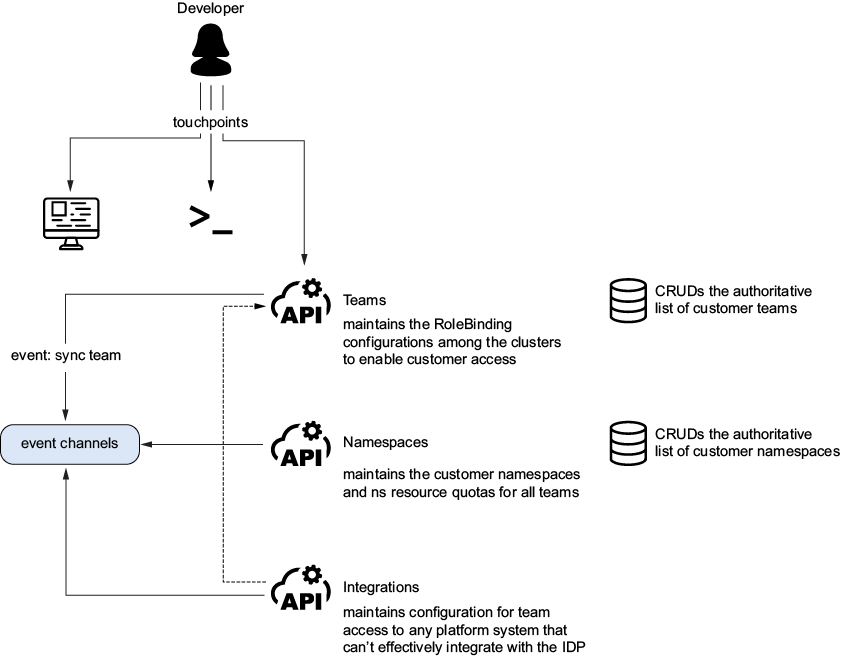
The event-driven teams-API pattern shows how an authoritative team database and synchronization stream can coordinate configuration across platform services. section 8.5
