Minimum viable usability is the threshold at which a platform works effectively enough to prove value, gather evidence, and guide further improvement. It prevents teams from building complex features before users demonstrate a need. section 2.3.1
Use the threshold to shape incremental platform work:
- Replace exhaustive future feature lists with changes that can prove value in actual use. section 2.3.1
- Collect monitoring data before and after delivery to compare delivered value with the initial estimate. section 2.3.1
- Let real user needs determine how the platform evolves instead of assuming every requested capability is necessary. section 2.3.1
Avoiding premature platform features
A performant service already supports far beyond the most optimistic plans, while Kafka would add queueing options that no current roadmap feature requires. Minimum viable usability favors validating demand before adding that complexity. section 2.3.1
Figure 2.9 New features or changes should go through a value flow. Routine operations and refactoring will be happening simultaneously, and using this flow will help us stay clear on how our current work fits into the bigger picture.
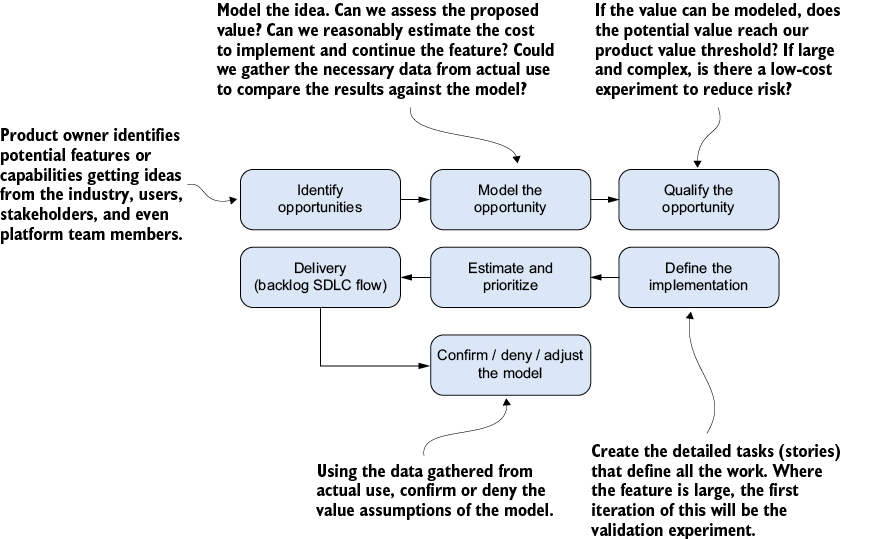
Use the value-flow model to place new features or changes alongside routine operations and refactoring. section 2.3.1
