A platform product is an internal product that provides engineering capabilities and services to software development teams. It combines platform engineering with product ownership: teams build useful capabilities, establish low-friction boundaries, and evolve the platform around developer needs and organizational outcomes. section 6.1 section 10.0
A durable platform product:
- Starts with an MVP and a unified team, then evolves toward loosely coupled domain teams as feature velocity and organizational scale increase. section 6.1
- Treats platform users and internal platform teams as self-serving consumers, requiring autonomy, clear boundaries, and reliable interactions. section 9.0
- Scales through intentional architectural and organizational changes rather than simply adding servers or optimizing performance numbers. section 9.0
- Uses event-driven releases and contract tests to preserve reliability and trust as adoption grows. section 9.0
Epetech’s evolving platform
Epetech begins with a single team establishing the platform’s architectural foundation and infrastructure pipelines. As more development teams and services arrive, domain teams become more autonomous, and centralized patterns evolve toward distributed strategies suited to scale. section 6.1 section 9.0
Figure 6.2 The engineering platform product domains also show the basic dependencies and almost exactly the order in which we’ll set up the initial product infrastructure pipelines. This diagram shows the pipelines we will build in each domain to create our Epetech starting engineering platform.
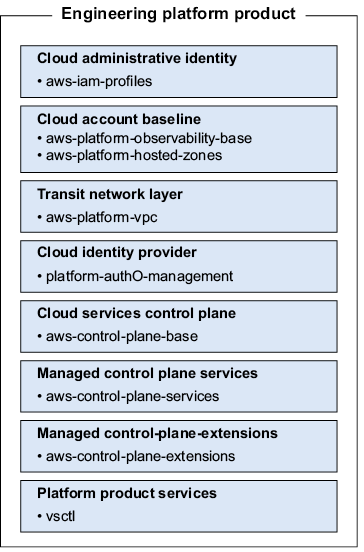
Use the domain-and-pipeline map to see platform dependencies and the approximate order for establishing the initial infrastructure. section 6.1
