A platform value model represents a platform capability’s costs, assumptions, expected benefits, adoption, and success measures. It connects technical improvements to developer experience, operational performance, and business outcomes so teams can prioritize investments and adjust them using evidence. section 3.2.2 section 10.1.1
Build the model as an evidence loop:
- Identify an inefficiency and potential improvement. section 3.2.2
- Calculate the current cost, including wasted time or staffing effort. section 3.2.2
- Simulate expected return through increased throughput or reduced cost. section 3.2.2
- Secure investment against the projected return, then compare actual results with projections. section 3.2.2
- Adjust platform investments according to the value actually delivered. section 3.2.2
Replacing a manual process
A manual process consumes one full-time person and causes 1,000 wasted developer hours per quarter. A self-service interface should track orientation time, task-completion time, adoption, and resulting efficiency. A related platform capability might target standardized container orchestration for at least 90% of development teams while increasing cognitive load by no more than 10%. section 3.2.2
Figure 3.5 Components of value modeling process. These are both subjective and objective measurements that a technical product owner should identify by working with stakeholders and engineers, which will be used to show platform value.
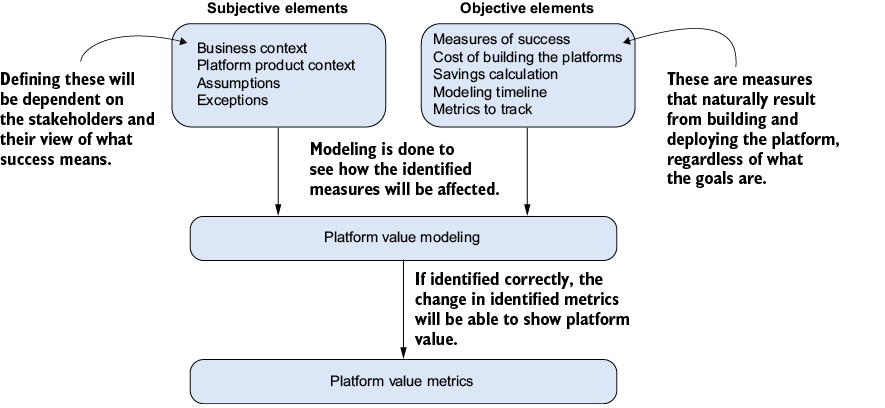
Use the value-model components to record business context, platform product context, expected outcomes, adoption, and subjective and objective measurements. section 3.2.2
Figure 10.1 Quantifying the value across multiple levels, from building the capabilities to addressing the business outcomes
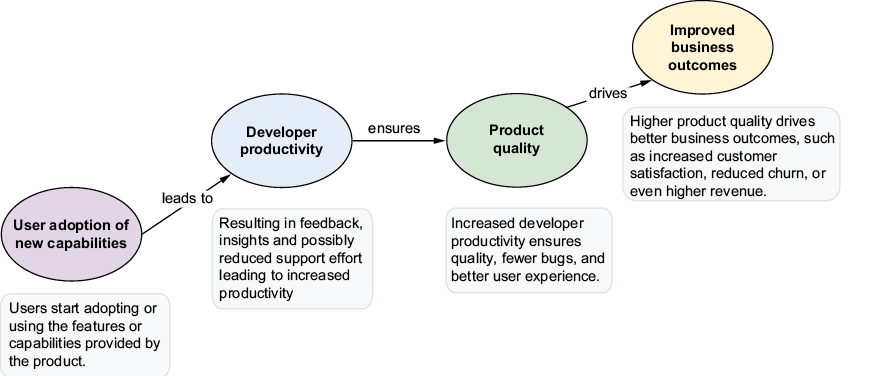
Trace value from platform capabilities through adoption, productivity, quality, and business outcomes. section 10.1.1
