Platform value modeling estimates and evaluates the costs, benefits, adoption, and outcomes of platform capabilities so investments can be prioritized against measurable value. section 3.2.2
Use a six-step value-modeling loop:
- Identify inefficiencies and potential improvements. section 3.2.2
- Calculate the current cost of the inefficiency. section 3.2.2
- Simulate potential return on investment through increased throughput or reduced cost. section 3.2.2
- Secure investment using the projected return. section 3.2.2
- Compare actual results with projections. section 3.2.2
- Adjust investments according to delivered value. section 3.2.2
Self-service replacement
A manual process consumes one full-time person and wastes 1,000 developer hours per quarter. Replacing it with self-service requires measuring orientation time, automation completion time, and resulting value. section 3.2.2
Figure 3.5 Components of value modeling process. These are both subjective and objective measurements that a technical product owner should identify by working with stakeholders and engineers, which will be used to show platform value.
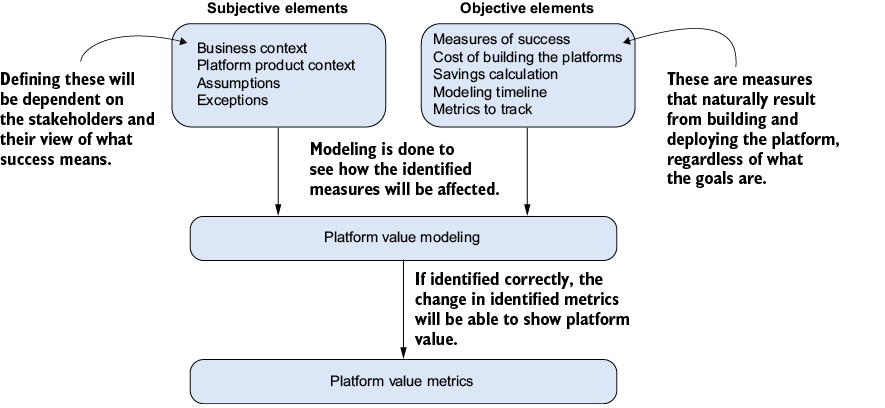
Use the value-modeling components to combine stakeholder-defined business context with subjective and objective measurements. section 3.2.2
