A team synchronization event carries team or membership changes from a teams API to integrated systems that maintain consistent authorization and configuration. section 8.5
Use the event to make platform integrations resilient:
- Publish events when the teams API onboards teams or changes membership. section 8.5
- Let subscribing services apply the required configuration in systems that do not provide the standard identity-provider experience. section 8.5
- Generate events repeatedly so subscribers can recover from unintended external changes and self-heal. section 8.5
Enterprise secret-store integration
A separate team managing an enterprise secret store subscribes to team events and configures the store to preserve a unified platform access experience. section 8.5
Figure 8.9 A “teams” API can be the interface to onboard a team and maintain the authoritative database for customer teams. This API will maintain the correct RoleBindings on the respective clusters. It can also populate the “sync team” events stream to which other services can subscribe.
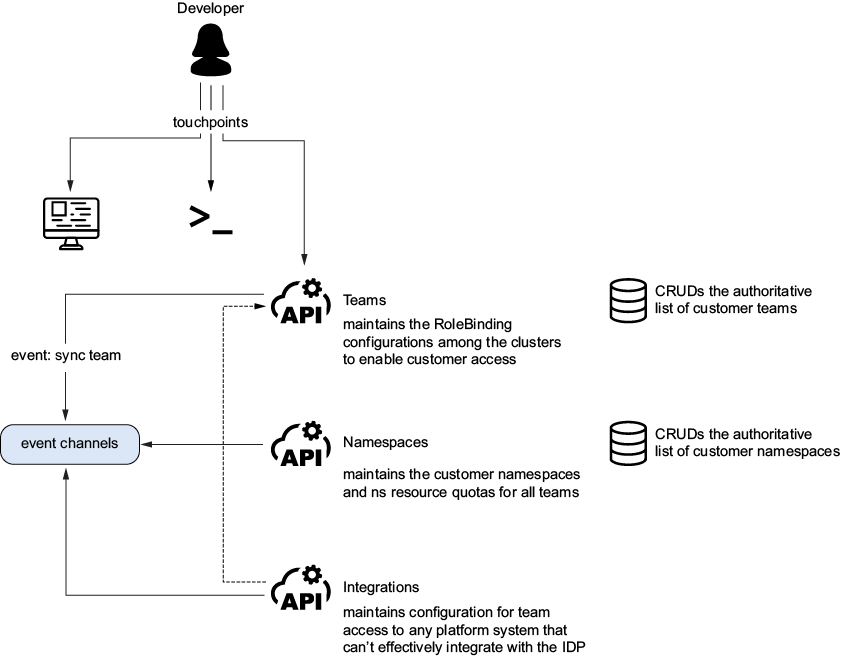
The architecture connects team onboarding, authoritative team data, cluster RoleBindings, and the subscriber event stream. section 8.5
