liveBook · Manning

Charge-off

As explained in Financial AI in Practice

The accounting recognition of a debt as a loss when it is considered unlikely to be collected.

A charge-off is a formal loss outcome when a loan concludes. Lenders may also write off portions of debt while seeking to avoid a larger loss. Loan outcomes, including charge-offs, feed back into underwriting models. section 4.2.1 section 4.2.1

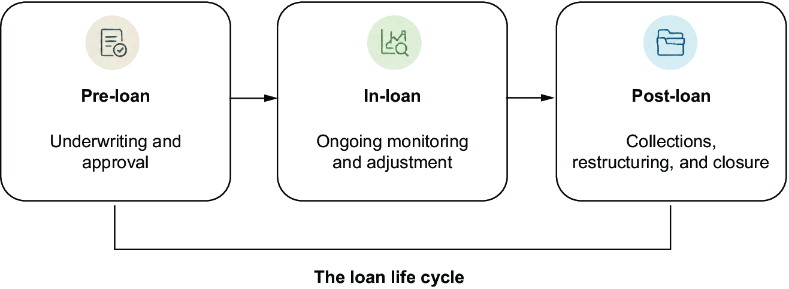
Figure 4.1 The three key phases of the loan life cycle, pre-loan, in-loan, and post-loan, apply to both personal and corporate credit products. Each phase contains distinct activities, decision points, and opportunities for AI-enhanced risk management.
figure

The loan-life-cycle diagram places charge-off in the closure phase, alongside repayment and return to current standing. section 4.2.1

How Financial AI in Practice covers it

How deep it goes
Names charge-off as a formal loss but does not explain its accounting mechanics.
What you can do after
Understand charge-off as a loan loss outcome that informs underwriting models.
How it connects
Connects charge-off with loan delinquency, default, expected credit losses, IFRS 9, CECL, and underwriting.

This explainer was generated by Manning's knowledge graph from the text of Financial AI in Practice. The section links point to the parts of the book it draws on.