liveBook · Manning

ChatterBot

As explained in Natural Language Processing in Action, Second Edition

ChatterBot is an open-source Python chatbot project that generates replies from stored statement-response pairs.

ChatterBot is an open-source Python chatbot project that reuses replies from stored statement–response pairs. It compares a new input with recorded statements using string edit distance, then returns the reply attached to the closest match. section 1.9

Its minimal response pipeline works by:

  • Storing statements together with replies learned from human or machine dialogue. section 1.9
  • Computing Levenshtein distance between the input and stored statements. section 1.9
  • Searching the database by brute force and reusing the corresponding response. section 1.9

Salvius

A ChatterBot-based dialog engine helped Salvius, a mechanical robot built from salvaged parts, maintain convincing conversations without tokenization or feature generation. section 1.9

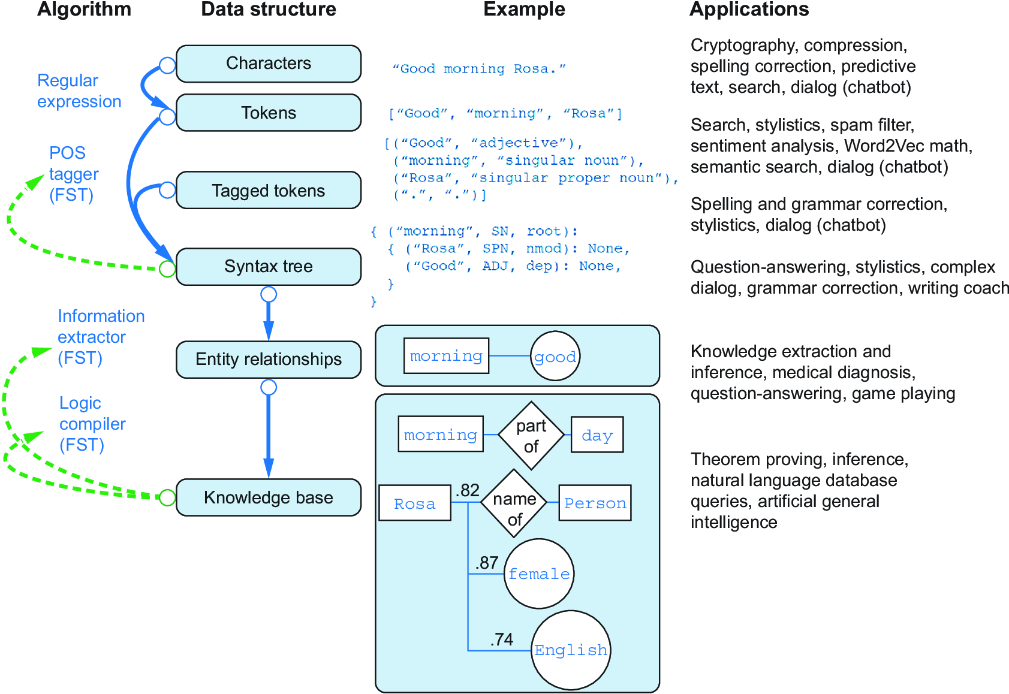
Figure 1.8 Example layers for an NLP pipeline
figure

Use the NLP pipeline diagram to situate ChatterBot’s lightweight approach at the response-generation stage. section 1.9

How Natural Language Processing in Action, Second Edition covers it

How deep it goes
Explains edit-distance matching and brute-force search, while stopping short of tokenization or feature-generation internals.
Examples
Uses stored statement–response pairs and the Salvius mechanical robot as concrete examples.
What it assumes
Assumes recorded dialogue pairs and basic string comparison, while avoiding requirements for tokenization or feature engineering.
What you can do after
Evaluate how a simple Python chatbot can reuse dialogue examples without tokenization or feature generation.
How it connects
Connects chatbot construction with NLP pipelines, string matching, Levenshtein distance, and response generation.

Related concepts

This explainer was generated by Manning's knowledge graph from the text of Natural Language Processing in Action, Second Edition. The section links point to the parts of the book it draws on.