A classical computer is conventional computing technology based on familiar information-processing concepts, powering devices from smartphones and home computers to scientific supercomputers. section 1.0
Classical computing provides the baseline against which quantum computing is evaluated. A sufficiently large quantum computer can perform any classical computation, but may do so less efficiently than a classical computer. section 1.2
Use a classical computer when:
- A routine task, such as checking email or searching a database, already runs well enough on classical hardware. section 1.2
- A quantum solution would take longer to execute than the original classical program. section 1.2
- A problem lacks the specialized structure and scale needed for practical quantum advantage. section 1.2
Classical software also supplies the comparison model for quantum software stacks: application software, programming tools, libraries, and system layers connect algorithms with hardware. Quantum stacks mirror these roles while targeting quantum devices. section 1.3.3
Figure 1.1 Quantum advantage might be achievable if the time a quantum computer takes to solve a certain problem grows at a slower rate as the problem size increases than the time a classical computer takes to do the same. In this case, problem instances that are much larger than the crossover size might be good candidates for quantum solutions. If the crossover time is months or more, quantum computing offers no practical advantage, since larger problem instances take much longer to solve, and running a quantum computer for months or years to solve a single problem is not practical.
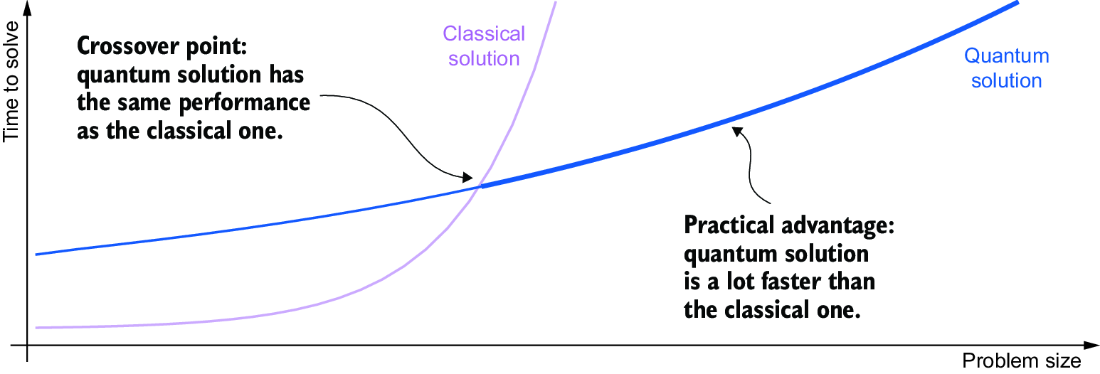
Compare how solution time grows with problem size and identify when a quantum approach could cross the classical performance curve. section 1.2
