Classless networking is an IPv4 addressing system in which prefix lengths are not restricted by address class. It replaced classful networking because it provides more flexible network design. section 7.3.4 section 7.4
Contrast the older classful rules with the classless approach:
- Class A used /8, Class B used /16, and Class C used /24; classless networking does not restrict prefix length to these classes. section 7.3.4 section 7.4
- Class D remains reserved for multicast and Class E for experimental purposes; these class designations are distinct from flexible host-network addressing. section 7.3.4
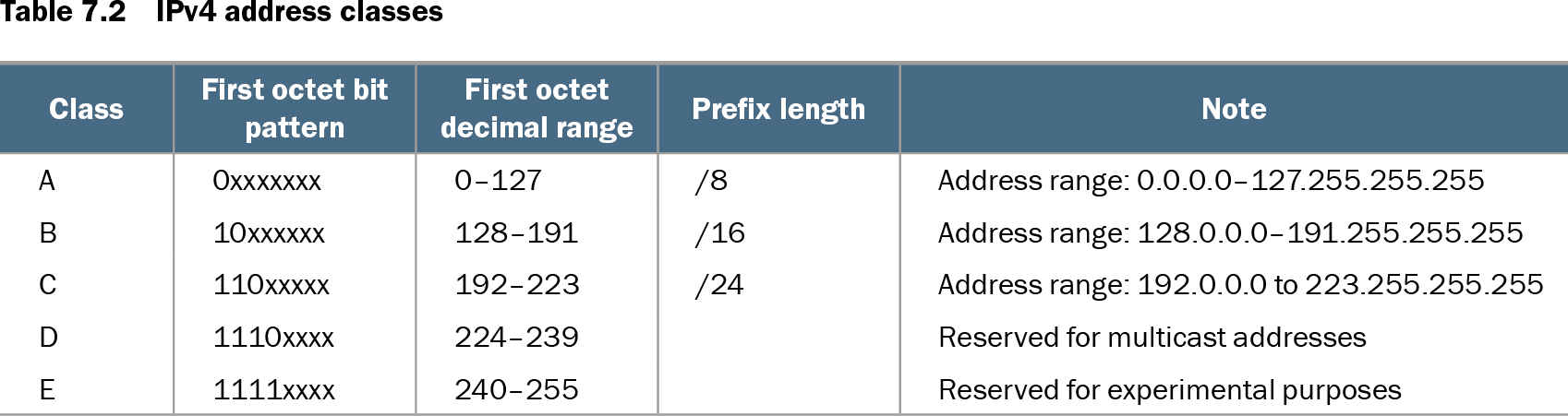
Table 7.2 IPv4 address classes (view table figure)
| Class |
First octet bit pattern |
First octet decimal range |
Prefix length |
Note |
|---|---|---|---|---|
| A |
0xxxxxxx |
0–127 |
/8 |
Address range: 0.0.0.0–127.255.255.255 |
| B |
10xxxxxx |
128–191 |
/16 |
Address range: 128.0.0.0–191.255.255.255 |
| C |
110xxxxx |
192–223 |
/24 |
Address range: 192.0.0.0 to 223.255.255.255 |
| D |
1110xxxx |
224–239 |
Reserved for multicast addresses |
|
| E |
1111xxxx |
240–255 |
Reserved for experimental purposes |
Compare the historical IPv4 class ranges, bit patterns, and prefix lengths that classless networking replaced. section 7.3.4