A commanding leadership style puts the leader in charge, using clear orders to coordinate action when pressure is high or an emergency requires immediate direction. section 3.2.1
The style is useful when people are scrambling, systems fail, and waiting for broad input could worsen the situation. It helps a lead developer regain order and formulate a plan quickly. section 3.2.1
Use the style deliberately rather than as a permanent way of leading:
- Reserve commands for emergencies and other high-pressure situations where quick decisions matter. section 3.2.1
- Avoid turning emergency authority into constant command and control, which conflicts with the lead developer’s support role. section 3.2.1
- Return to supportive approaches, including servant, coaching, transactional, or transformational leadership, when the immediate crisis has passed. section 3.2.1 section 3.5
- Adapt leadership habits to changing expectations: participation and meaning are valued more strongly than older command-and-control norms. section 3.1
A production emergency
A system error leaves the team scrambling. Instead of waiting for everyone to agree, the lead developer assigns immediate actions, restores order, and creates a recovery plan, then resumes a more participatory approach afterward. section 3.2.1
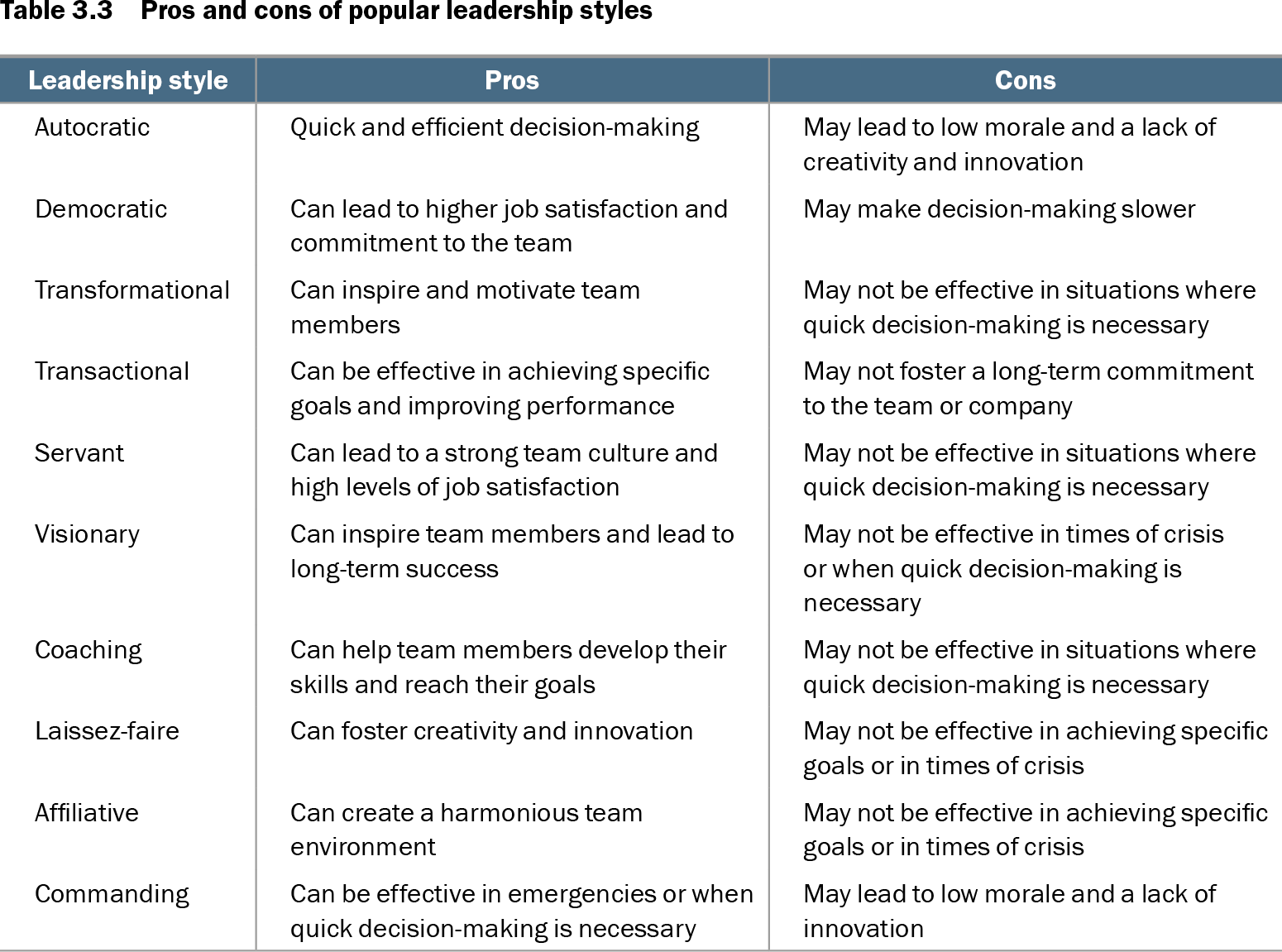
Table 3.3 Pros and cons of popular leadership styles (view table figure)
| Leadership style |
Pros |
Cons |
|---|---|---|
| Autocratic |
Quick and efficient decision-making |
May lead to low morale and a lack of creativity and innovation |
| Democratic |
Can lead to higher job satisfaction and commitment to the team |
May make decision-making slower |
| Transformational |
Can inspire and motivate team members |
May not be effective in situations where quick decision-making is necessary |
| Transactional |
Can be effective in achieving specific goals and improving performance |
May not foster a long-term commitment to the team or company |
| Servant |
Can lead to a strong team culture and high levels of job satisfaction |
May not be effective in situations where quick decision-making is necessary |
| Visionary |
Can inspire team members and lead to long-term success |
May not be effective in times of crisis or when quick decision-making is necessary |
| Coaching |
Can help team members develop their skills and reach their goals |
May not be effective in situations where quick decision-making is necessary |
| Laissez-faire |
Can foster creativity and innovation |
May not be effective in achieving specific goals or in times of crisis |
| Affiliative |
Can create a harmonious team environment |
May not be effective in achieving specific goals or in times of crisis |
| Commanding |
Can be effective in emergencies or when quick decision-making is necessary |
May lead to low morale and a lack of innovation |
Compare commanding leadership with other styles by weighing rapid decision-making against morale, creativity, commitment, and team culture. section 3.2.1