The commit phase is the second phase of two-phase commit (2PC). After participants prepare their changes and vote yes or no, the transaction coordinator instructs them to commit or roll back according to the votes. section 9.1.2
In a microservice architecture, 2PC can restrict technology choices and relies on synchronous communication, which reduces availability. Consider these constraints when choosing distributed transactions. section 9.1.2
Figure 9.1 A hypothetical implementation of XA/2PC in a microservice architecture. The services register as participants with the Transaction Coordinator. They enlist their databases in the distributed transaction. The Transaction Coordinator commits the transaction in two phases. In the prepare phases, participants vote on whether they can commit. In the commit phase, the transaction coordinator instructs all participants to either commit or roll back based on the collected votes.
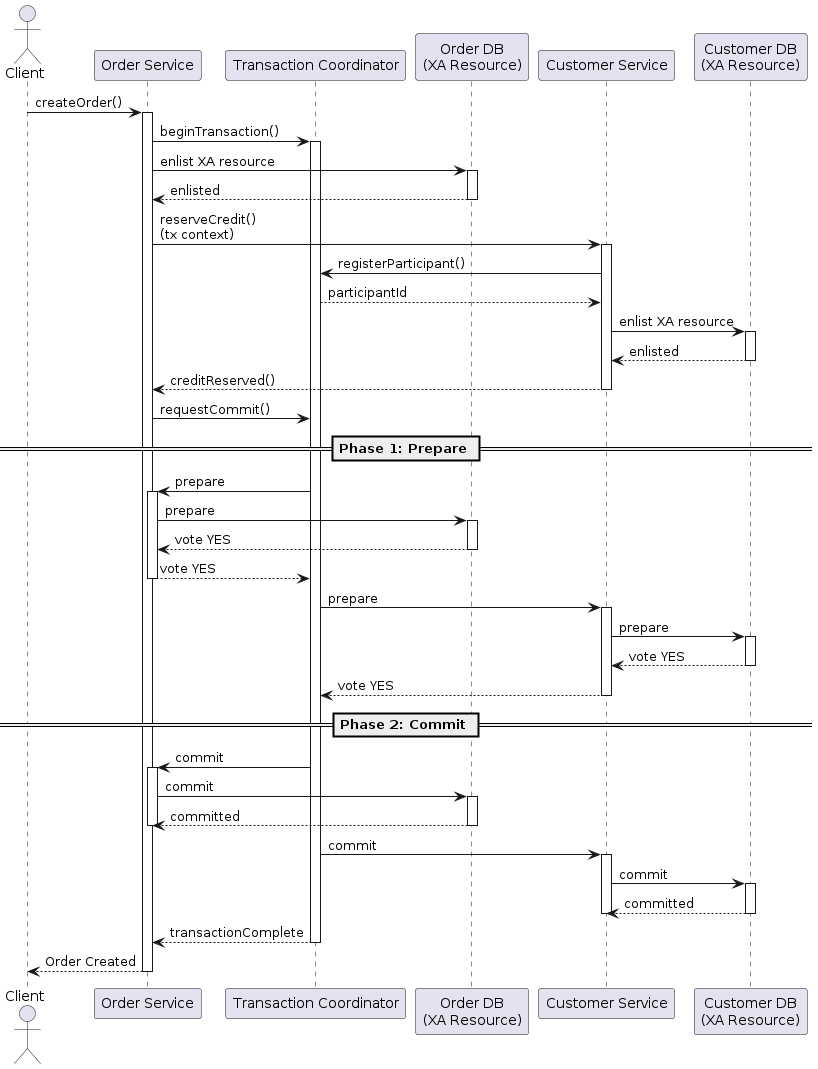
Follow the coordinator, service participants, and databases through both phases of the transaction. section 9.1.2
