A commonplace book is a personal collection of quotations, ideas, sayings, and excerpts, enriched with the compiler’s own remarks. Rereading and connecting these notes can turn borrowed words into working knowledge. The practice suits programmers who want to capture thoughts away from a screen and develop ideas over time. section 2.3.1
Build one as a flexible thinking habit:
- Collect quotes, idioms, maxims, poems, letters, recipes, or ideas that seem worth returning to. section 2.3.1
- Add personal remarks after copying an excerpt so the material becomes connected to your own understanding. section 2.3.1
- Choose paper or digital notes, then revisit the collection for unexpected connections and new insights. section 2.3.1
A programmer’s notebook
A notebook might combine a quotation from a podcast, a sketch, a personal synthesis, and arrows linking it to software concepts being explored. Its value comes from the conversation among fragments, not from tidy formatting. section 2.3.1
Figure 2.3 A gloriously messy excerpt from one of my notebooks. It contains quotes I picked up while reading or listening to podcasts (left), and my own synthesis of Sönke Ahrens’ How To Take Smart Notes, intertwined with links to other pages and concepts I’m working on.
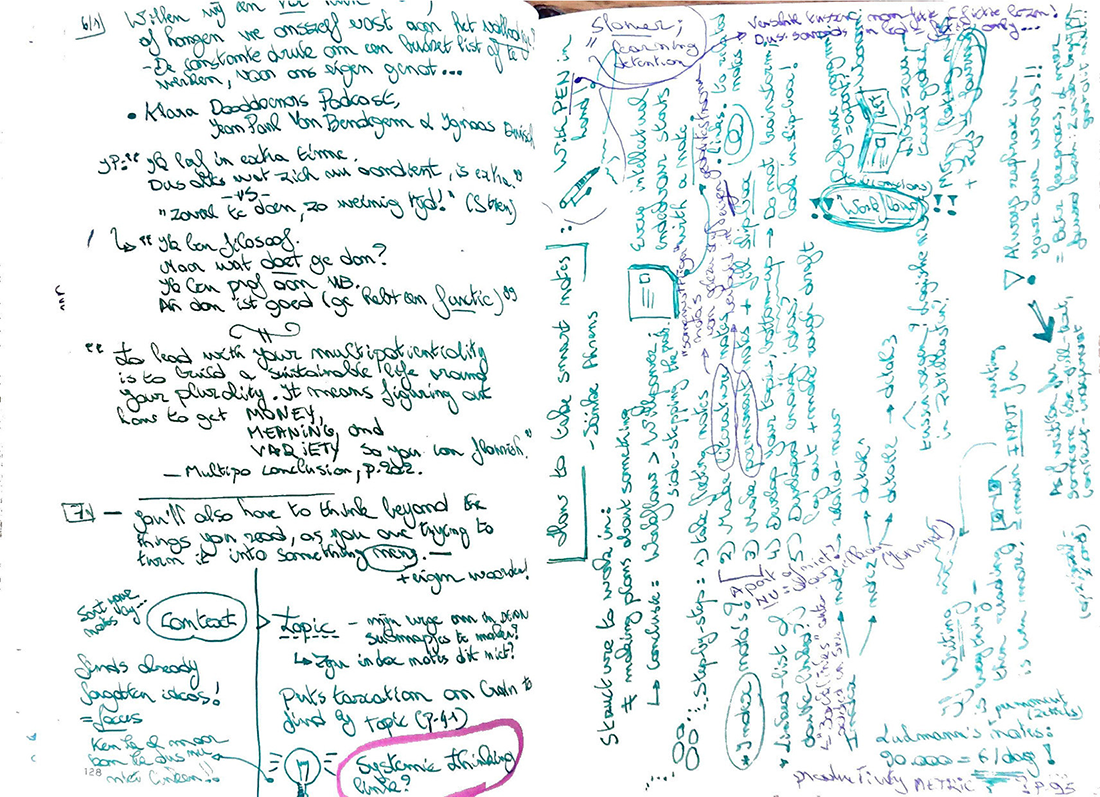
Browse a messy notebook page that intertwines collected quotations, personal synthesis, and links to related concepts. section 2.3.1
