A condition node is a behavior-tree leaf that checks the current state and reports success or failure. Its result controls whether surrounding nodes continue, stop, or fall back. section 6.1.1 section 6.1
Use a condition node to:
- Check a state before allowing a sequence to continue. section 6.1.1
- Trigger fallback behavior when its check fails. section 6.1.1
- Verify results produced by an action, such as a repaired file or completed itinerary. section 6.4 section 6.6
Verification in an agentic behavior tree
A sequence first asks one assistant to debug code, then runs a condition named Verify. The condition checks whether the fix works; success completes the sequence, while failure prevents successful completion. section 6.4
Figure 6.2 The execution process of a simple behavior tree
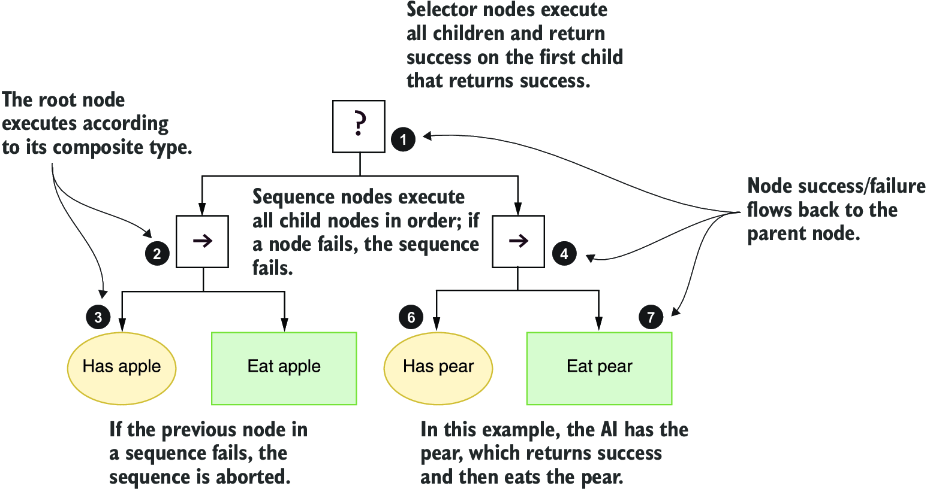
Trace how a condition result changes execution through sequences and selectors. section 6.1.1
