liveBook · Manning

Configuration as code

As explained in Platform Engineering on Kubernetes

Configuration as code is the practice of representing system and application configuration in version-controlled, machine-readable files.

Configuration as code represents application and system configuration in machine-readable, versioned files. Kubernetes YAML resources describe application topology, connect services to containers, and define settings such as environment variables. section 2.5

Applied to Kubernetes deployments, configuration as code enables teams to:

  • Package and version deployment configuration for creating application instances in different environments. section 2.5
  • Use Helm templating to tune resource consumption and network configuration for a target environment. section 2.5
  • Reuse the same Kubernetes APIs and resources across local and cloud-provider clusters. section 2.5
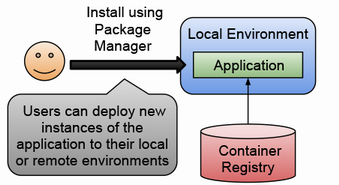
Figure 2.32 Applications’ lifecycle from building and packaging to running inside an environment

Trace the lifecycle from building and packaging an application to running it inside an environment. section 2.5


How Platform Engineering on Kubernetes covers it

How deep it goes
Explains topology, container links, environment variables, packaging, versioning, and Helm tuning, but stops before package production.
Examples
Uses Kubernetes resources, service environment variables, Helm charts, and local-to-cloud cluster deployment as examples.
What you can do after
Operate/configure application instances by versioning Kubernetes resources and tuning Helm templates for target clusters.
How it connects
Connects configuration as code with Kubernetes, Helm, platform engineering, continuous delivery, and environments.

Also explained in

Compare how 3 books explain configuration as code →

Related concepts

This explainer was generated by Manning's knowledge graph from the text of Platform Engineering on Kubernetes. The section links point to the parts of the book it draws on.
