Conflicting context occurs when an agent receives contradictory, ambiguous, or inconsistently presented guidance. Prompt wording, documentation, and code comments can pull the implementation toward incompatible approaches, producing code that partially satisfies several instructions but fully aligns with none. section 3.6
Choosing the reliable signal
A refactoring request names the StripeV3 client, while an old code comment references v1. A disciplined agent identifies the conflict, treats the package.json dependency as the stronger source of truth, states its interpretation, and asks for approval before proceeding. section 3.6.1
Reduce the risk before accepting generated code:
- Require the agent to analyze dependencies, compare available guidance, describe intended changes, and plan error-handling or data-structure updates before coding. section 3.6.1
- Review the stated interpretation before reviewing implementation details; explicit reasoning exposes outdated assumptions and makes human approval part of the workflow. section 3.6.1
Figure 3.12 Cline drafting plan of the execution.
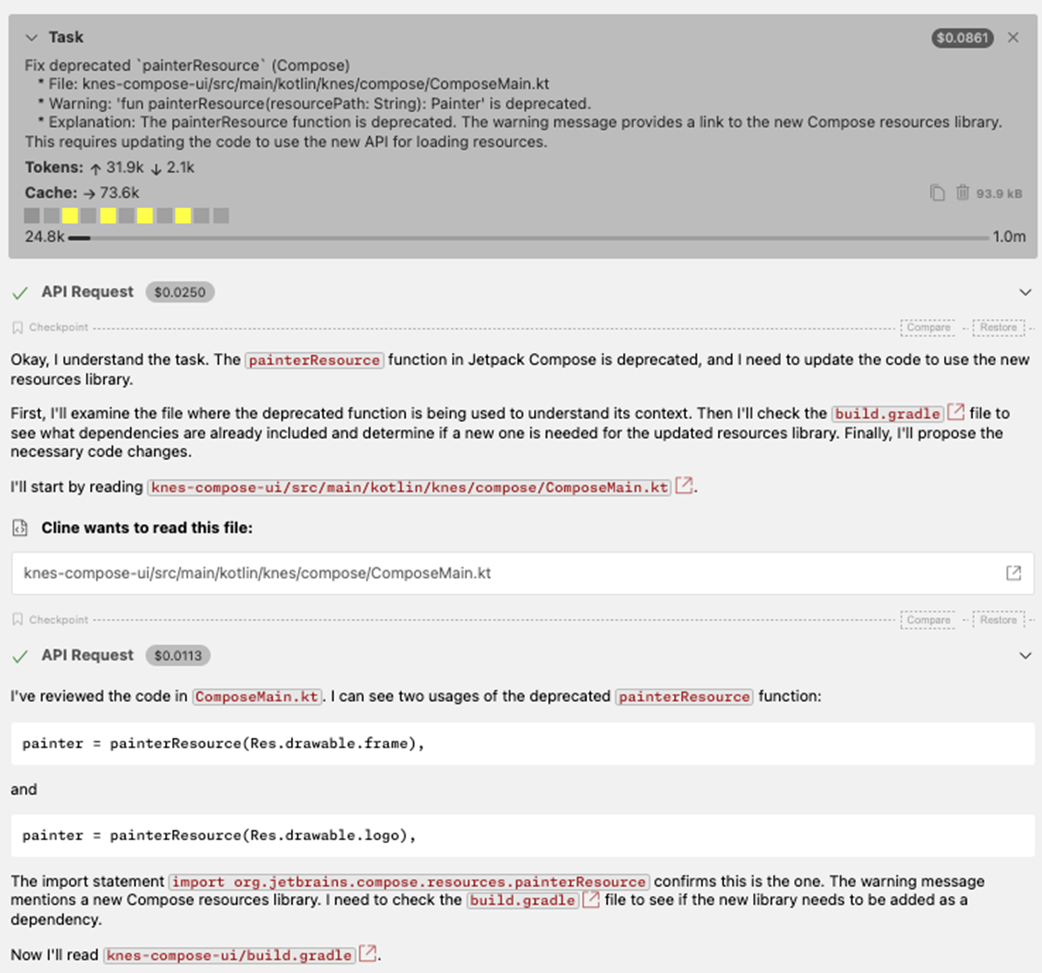
A visible execution plan makes the agent’s chosen interpretation inspectable before implementation begins; the companion approval view supports a human checkpoint. section 3.6.1
