A content-based cache stores information extracted from a workflow step, such as input, output, or data-source metadata. The workflow compares that content on later runs to decide whether the step still needs execution. section 5.4.2
In machine-learning workflows, cached content can support several execution decisions:
- Compare dataset metadata, such as record counts, to detect substantial changes that justify re-running data ingestion. section 5.4.2
- Reuse a sufficiently fresh dataset when its age remains within a configured time window, allowing training to start without re-ingestion. section 5.4.2
- Cache model artifacts, hyperparameters, or performance statistics to decide whether expensive model training is redundant or worth repeating. section 5.4.3
- Manage cache growth with expiration or garbage collection, because frequent workflows can create large numbers of stored results. section 5.4.3
Figure 5.23 The workflow has been triggered, and we check whether the metadata collected from the dataset, such as the number of records in the dataset, has changed significantly. If it’s not significant, we then skip the execution of the unnecessary data ingestion step and execute the model training step directly.
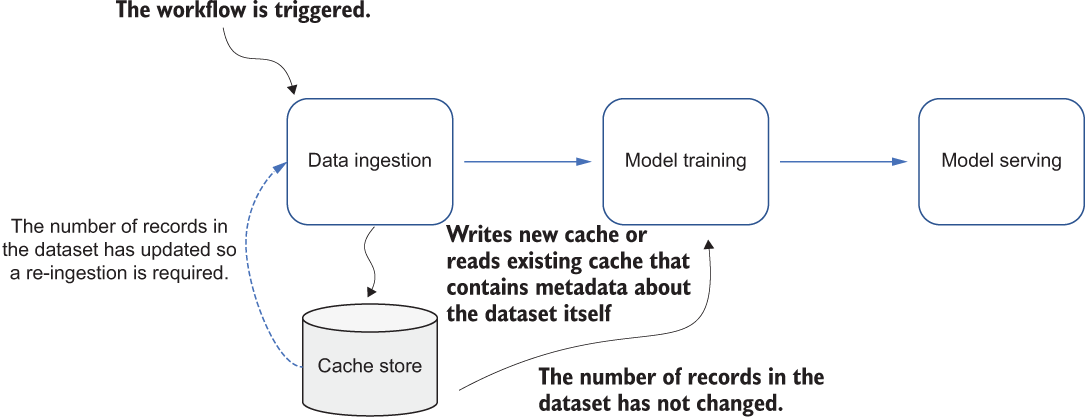
Trace the workflow decision that compares dataset metadata and skips redundant data ingestion when the change is insignificant. section 5.4.2
