A context value is the data exposed by a React provider to consuming components. It can be a primitive such as a dark-mode Boolean or an object combining state with actions such as a toggle function. section 2.1.1 section 6.1.3
Design the value with these implementation concerns in mind:
- Keep related data and operations together when consumers need both; the dark-mode example supplies isDarkMode and toggleDarkMode in one object. section 2.1.1
- Expect every consumer to re-render when the context changes. Memoize components that do not consume the context to limit unrelated updates. section 2.1.1
- Let TypeScript infer simple values from createContext defaults, or provide a generic type for nullable, structured values. section 6.1.3
- Use useContext to retrieve the value in the demonstrated syntax. React 19 also supports a context element with value and consumption through use(). section 2.1.1 section 6.1.3
Typed dark-mode context
Define a context as DarkModeContext = createContext<DarkMode | null>(null), where DarkMode contains mode and toggle. Provide the current value from App, then consume it through a checked useDarkMode helper; components such as Button can read mode without receiving it through every prop. section 6.1.3
Figure 2.3 A document tree sketch of our website with a dark mode/light mode toggle. Note how we pass in an object to the context provider (dashed box), which we can deconstruct and use wherever we need either of the two values in the components below the provider in the document tree.
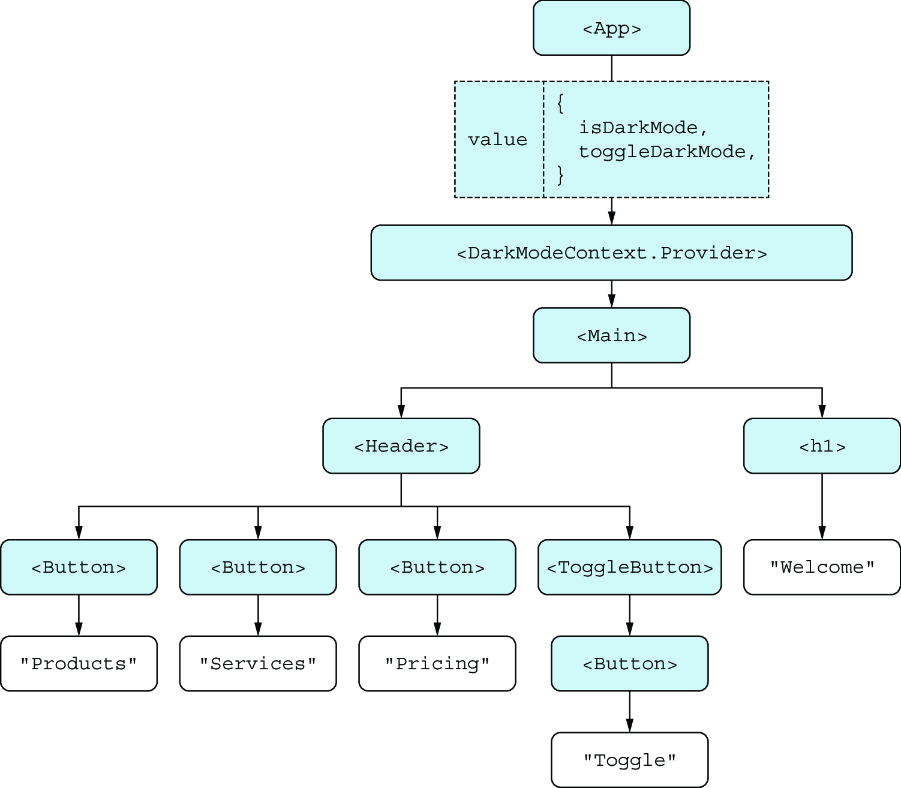
A document-tree sketch shows how one provider-supplied object distributes dark-mode state and its toggle action to components below it. section 2.1.1

