liveBook · Manning

ContextOps

As explained in Context Engineering

ContextOps is an operational framework concerned with shaping how a model is used through its context sources.

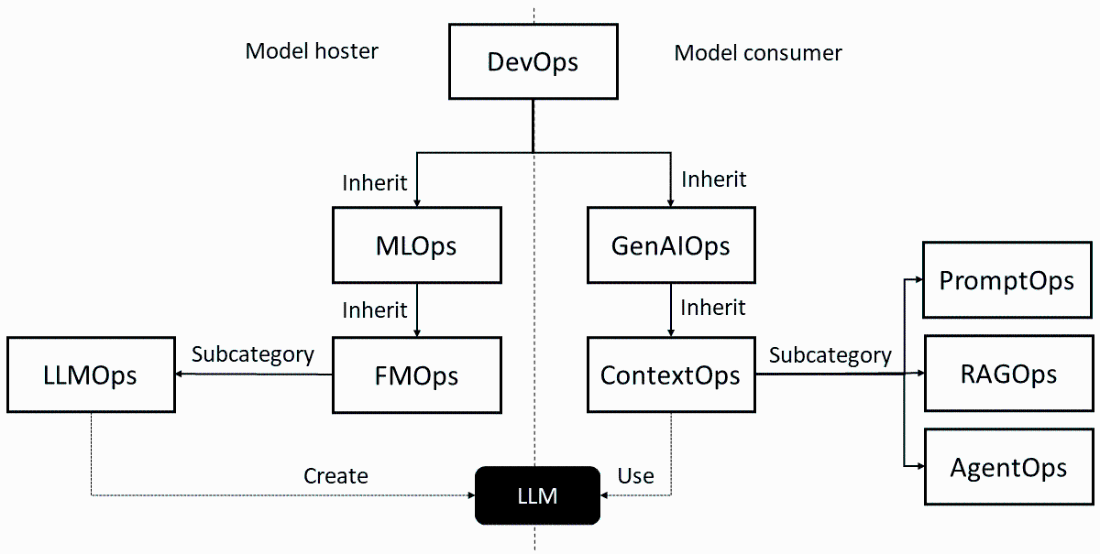
ContextOps is the operational framework for shaping how an existing foundation model is used through its context sources. It extends GenAIOps on the model-consumer side. section 9.3.2

Its specialized disciplines govern different parts of the context:

  • PromptOps manages prompt templates, versioning, and evaluation. section 9.3.2
  • RAGOps manages indexing and retrieval pipelines. section 9.3.2
  • AgentOps manages tools, memory, state, and agentic orchestration. section 9.3.2
Figure 9.3 Evolution of operational disciplines from DevOps to LLMOps and ContextOps, distinguishing model hoster responsibilities from model consumer responsibilities in LLM-based systems
ops v1

Shows how operational disciplines develop from DevOps toward model-hosting and model-consumer responsibilities. section 9.3.2

How Context Engineering covers it

How deep it goes
Defines the framework and names three specialized disciplines, stopping short of detailed implementation guidance.
Examples
Uses prompt templates, retrieval pipelines, and agent tools, memory, and state as context-source examples.
What it assumes
Assumes an existing foundation model and a consumer-side application that uses it.
What you can do after
Evaluate/understand how teams can divide responsibility for prompts, retrieval, tools, memory, and state.
How it connects
Connects GenAIOps with PromptOps, RAGOps, and AgentOps, alongside MLOps, FMOps, and LLMOps.

Related concepts

This explainer was generated by Manning's knowledge graph from the text of Context Engineering. The section links point to the parts of the book it draws on.