Conversation design plans engaging, cooperative dialogues between users and chatbots. It combines UI design, empathy, user-goal analysis, dialogue state, intent understanding, and response planning. section 12.1.2 section 12.9
Develop a chatbot conversation through five practical stages:
- Define the chatbot’s goal, users, context, success criteria, and problem to solve. section 12.1.2
- Draft a happy path, then act out the imagined user–chatbot exchange. section 12.1.2
- Diagram conversation states, chatbot messages, possible user intents, and transitions between branches. section 12.1.2 section 12.1.3
- Choose NLP algorithms that can generate responses at each dialogue branch. section 12.1.2
- Maintain the design by analyzing real utterances, labeling misunderstandings, and adding branches or responses for frequent needs. section 12.6
A math tutor chatbot
Designing Rori exposes constraints that a generic happy path can miss: children may borrow another person’s device, may respond creatively during exercises, and require parent or guardian consent for direct interaction. Later, unexpected utterances such as “This is too easy” can trigger a lesson-menu response. section 12.1.2 section 12.6
Figure 12.6 Conversation design workflow
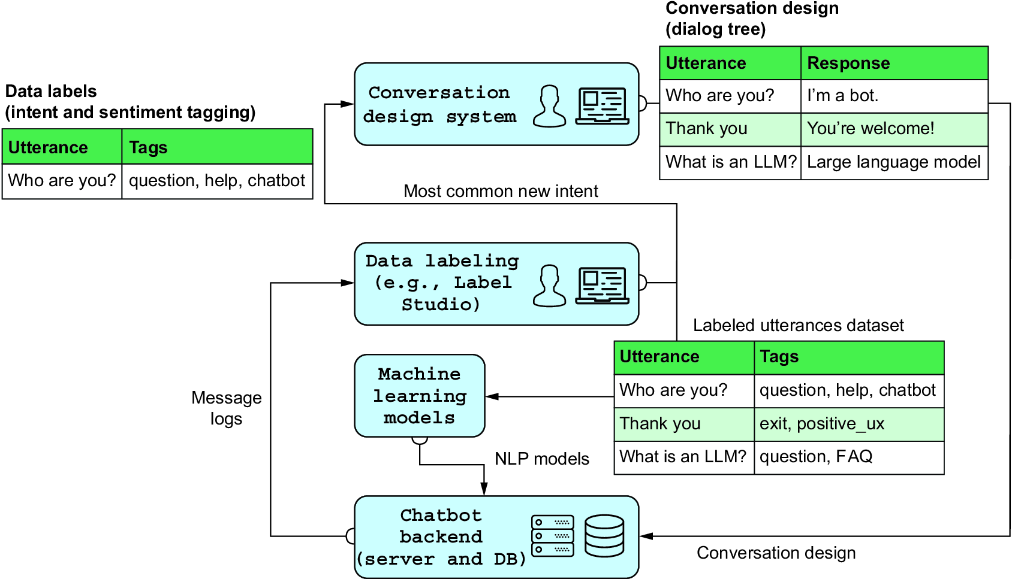
Use the conversation design workflow to connect planning, deployment, user-utterance analysis, and iterative redesign. section 12.6

