When a proposal meets friction, the discussion may be using mismatched reasoning modes. Coordination means noticing the structure in play and shifting it without resetting the conversation. section 7.5
Listen for the reasoning pattern, then choose the smallest useful shift:
- If people branch into alternatives before sharing assumptions, return briefly to visible reasoning; compare options on a common foundation. section 7.5
- If assumptions are clear but discussion circles, generate a few structurally distinct approaches before converging. section 7.5
- If explored options remain persuasive from different positions, rotate the lens and compare how each performs under different priorities. section 7.5
Figure 7.3 Interventions require no formal declaration. A single sentence is sufficient to shift the reasoning mode to an appropriate layer.
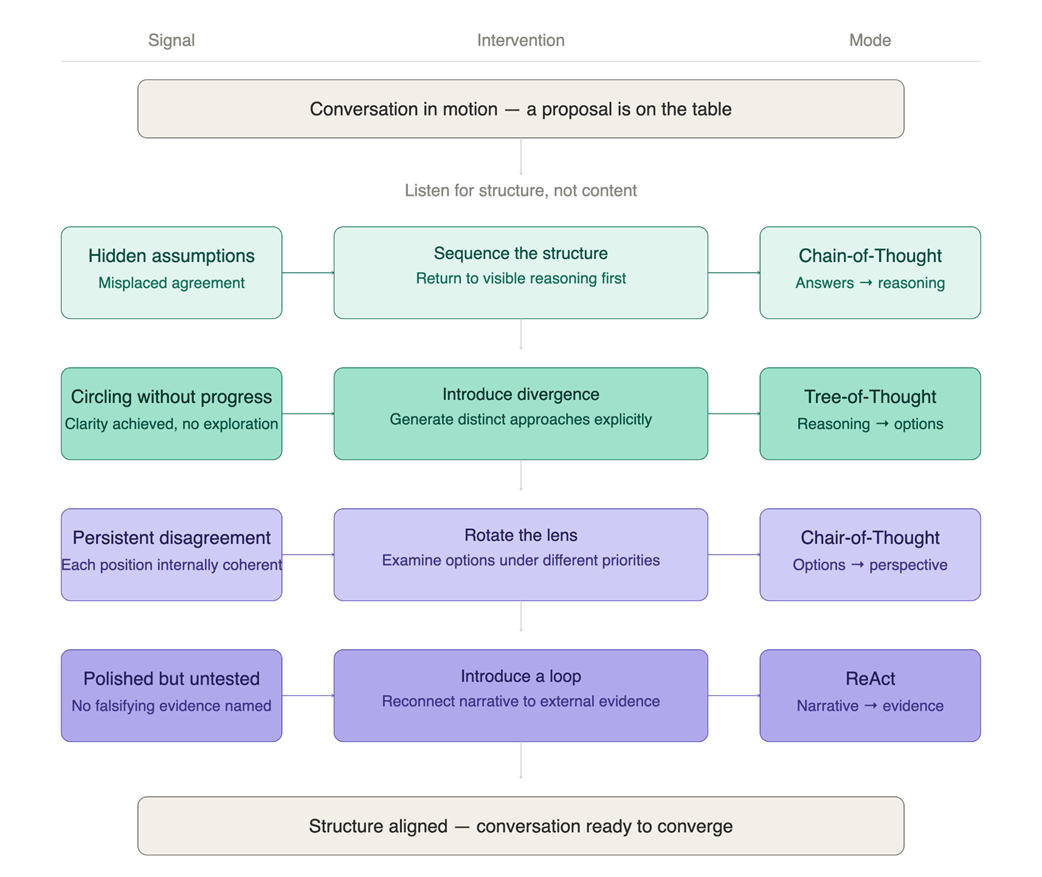
A single sentence can shift the conversation to a more appropriate reasoning mode; no formal declaration is needed. section 7.5