liveBook · Manning

Corporate information security

As explained in Software Security for Developers

An organizational security function responsible for securing applications and defining corporate security requirements.

Corporate information security is the organizational function responsible for securing applications across a company. It defines security standards, helps development teams meet them, and supports secure production releases. section 1.3

Its practical responsibilities include:

  • Writing corporate security standards that applications must follow. section 1.3
  • Consulting with development teams on application security and compliance. section 1.3
  • Helping applications satisfy security audits before production release. section 1.3
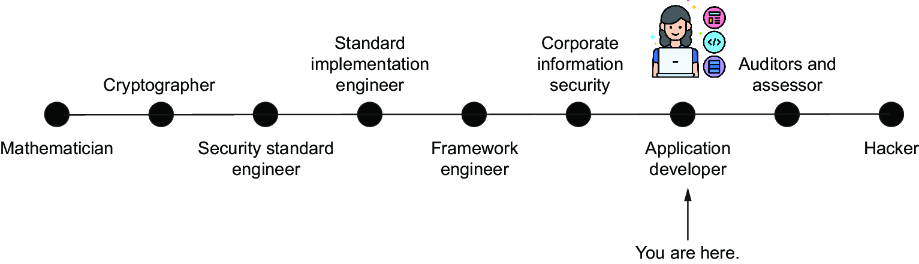
Figure 1.4 The spectrum of technical roles involved in computer security roles and responsibilities
figure

Maps the technical roles involved in computer security and clarifies where corporate information security fits. section 1.3

How Software Security for Developers covers it

How deep it goes
Defines responsibilities and developer relationships but stops short of detailing specific corporate controls or standards.
Examples
Uses corporate standards, developer consultations, security audits, and production-release approval as concrete artifacts.
What it assumes
Assumes an application-development context while teaching the need to understand employer security standards.
What you can do after
Evaluate application requirements against corporate standards and collaborate effectively with an InfoSec team.
How it connects
Connects application security with security standards, development teams, security audits, and production release.

Related concepts

This explainer was generated by Manning's knowledge graph from the text of Software Security for Developers. The section links point to the parts of the book it draws on.