Corporate social responsibility makes an ML project accountable for its ethical, legal, privacy, and wider organizational consequences. Treat it as a delivery requirement: clarify the project hypothesis first, then build responsibility checks into pre-project planning from the beginning. section 2.8 section 2.6
Turn responsibility into explicit PS8 work items:
- Check and document CSR, ethical, privacy, and regulatory requirements. section 2.6
- Challenge assumptions, provide feedback, and record the resulting project assumptions. section 2.6
- Create a Privacy & Data Impact Assessment and an Algorithmic Impact Assessment. section 2.6
- Investigate both generic data and ML law and domain-specific obligations, such as patient safety, financial risk, or industrial health and safety. section 2.6
A responsibility checkpoint
Before delivery planning proceeds, the team documents applicable GDPR and domain requirements, challenges its assumptions, and attaches completed PDIA and AIA documents to the project record. section 2.6
Figure 2.3 A layered model of ML safety (adapted from Hendrycks et al [7])
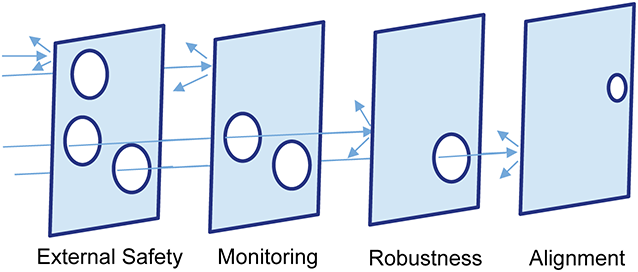
Use the layered ML safety model to navigate safety concerns alongside corporate responsibility and ethics. section 2.6
