Creative tinkering means following curiosity through informal experiments with code, hardware, materials, or ideas. It has no fixed destination: the point is to learn, discover interests, and enjoy making. Chasing a rabbit differs from yak shaving because distraction is the purpose rather than an accidental detour from a real task. section 6.7.1
Try creative tinkering as a habit:
- Follow an intriguing question down the rabbit hole, even when it is not immediately productive. section 6.7.1
- Make small experimental projects—such as a toy language, emulator, or graphics experiment—and notice which interests keep returning. section 6.7.1
- Shape a personal workshop with accessible tools, materials, references, and room to think; the environment can redirect the work. section 7.5.2
- Leave space for coincidence, while choosing deliberately when to depart from the planned path. section 7.5.2
A workshop changes the artifact
Engineers who printed circuit boards while reverse-engineering Game Boy internals could produce something different from engineers who simply ordered parts. The available materials and the willingness to persist became part of the creative result. section 7.5.2
Figure 7.7 A peek inside Joke Raes’ atelier. The walls are decorated with her sculptures. Ample sketchbooks, manuals, and various materials are within reach, yet enough light and space remain to breathe, think, and work. Photo courtesy of Joke Raes.
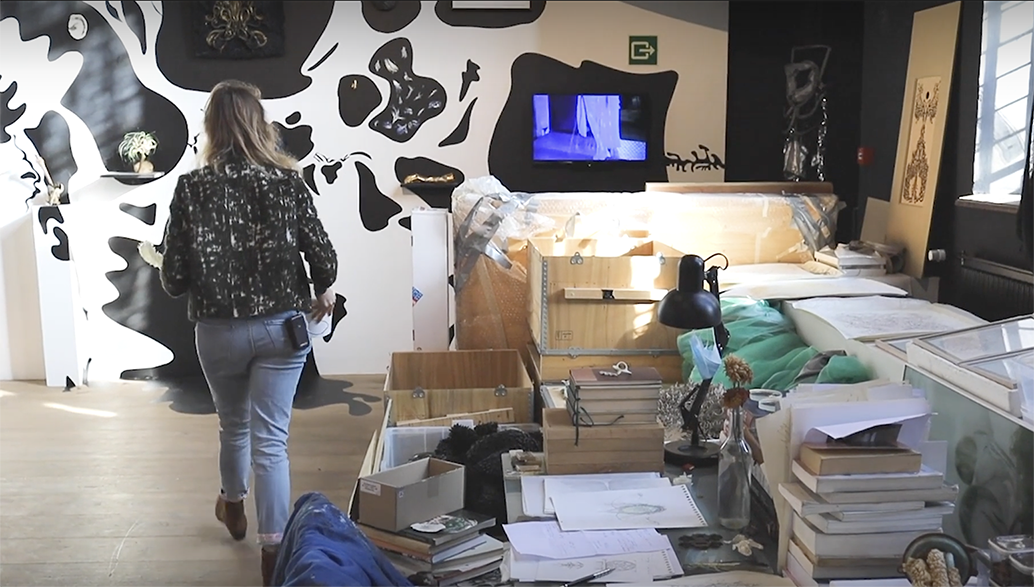
Use the atelier as a visual model for a programming workshop: keep tools, references, experiments, and enough open space within reach. section 7.5.2
