Credential compromise occurs when a secret is exposed or acquired without authorization, potentially enabling access to protected systems or data. Prepare for it before an incident; do not wait for a credential to expire or an integration to fail. section 11.5.3
For a suspected compromise:
- Revoke the secret and generate a replacement. section 11.5.3
- Force re-authentication by severing active connections using the credential, or temporarily block affected services. section 11.5.3
- Review logs to establish the timeline and scope of suspicious activity. section 11.5.3
- Notify relevant security, operations, and—if customer data is involved—legal stakeholders; then find and fix the cause of the leak. section 11.5.3
How a secret can leak
A credential may be hardcoded in a Git commit or exposed through social engineering. Identify how it escaped, not just which secret to replace. section 11.5.3
Figure 11.7 Mature architectures "catch" authentication failures and swap in fresh secrets without stopping the application.
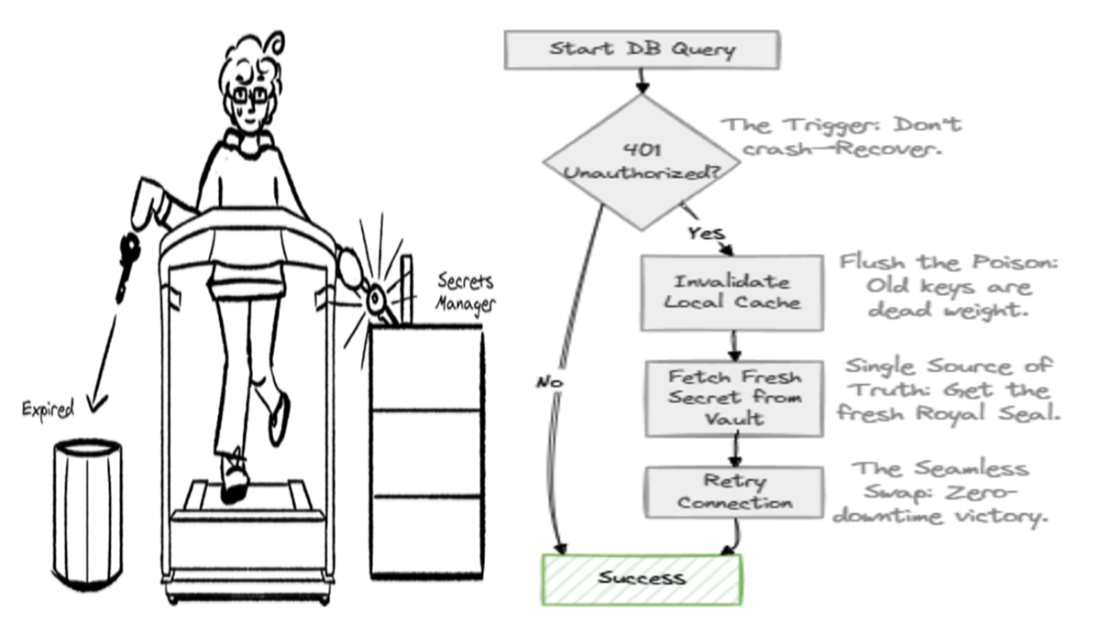
Illustrates how catching authentication failures and swapping in fresh secrets can keep an application running; this complements, but does not replace, the compromise response steps. section 11.5.3
