An evaluation criterion is an objective quality, capability, outcome, or standard used to judge whether a candidate can perform a role. Criteria combine soft skills, such as articulation and professionalism, with hard skills, such as software development lifecycle knowledge, design patterns, or coding ability. section 5.2.1
Build useful criteria by connecting each item to the work the candidate will perform:
- Imagine the candidate a few weeks into the role and identify the capabilities needed for assigned tasks. section 5.2.1
- Write criteria as objective points rather than interview questions; several questions or answers may reveal one criterion. section 5.2.1
- Select roughly 10 to 20 role-specific items and rate each candidate from 1 to 10. section 5.2.1
- Define what evidence belongs in each score range so interviewers apply the scale consistently. section 5.2.1
Scaling AWS knowledge
A score of 0 indicates no previous AWS experience; 1–3 covers limited use of services such as S3 or EC2; 4–6 indicates account setup and IAM user configuration; 7–10 indicates deeper VPC, subnet, security-group, NAT-gateway, and role-based IAM experience. section 5.2.1
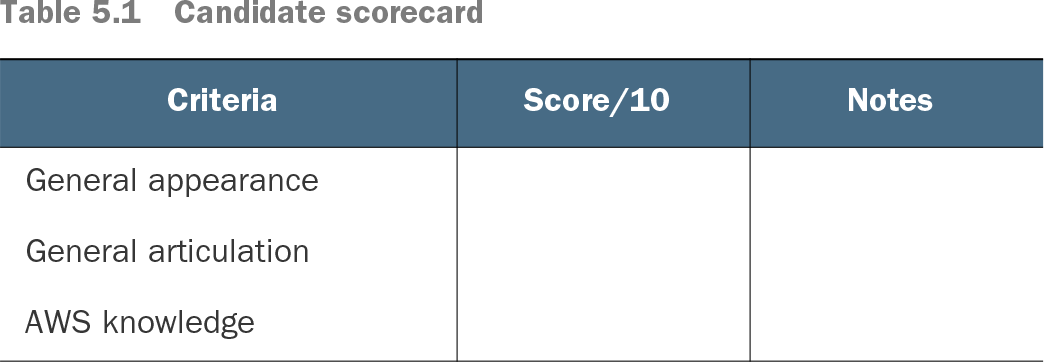
Table 5.1 Candidate scorecard (view table figure)
Use the candidate scorecard to record each criterion, its score out of 10, and supporting notes. section 5.2.2
A scorecard creates a shared, data-led framework for comparing candidates and discussing disagreements. It supports judgment rather than replacing it: groups should still consider important factors not captured by the scores. section 5.2.2