Cross-cluster replication copies Kafka data between separate clusters to support disaster recovery, geographic availability, and edge-to-central data flows. section 11.4.1 section 12.2.3
In an active-passive design, one cluster serves producers and consumers while a passive cluster receives asynchronous copies. Failover can involve downtime and data loss because RTO and RPO remain greater than zero. section 11.4.1
An active-active design keeps both clusters operational and serving clients. It can avoid planned failover downtime, but simultaneous writes introduce conflict and data-loss risks during an outage. section 11.4.1
Common deployment patterns include:
- Use MirrorMaker to consume topics from one cluster and produce them to another, providing basic cross-cluster replication. section 12.2.3
- Use Cluster Linking in Confluent Platform for broker-level, real-time replication without requiring producers or consumers to perform the transfer. section 12.2.3
- Replicate from an edge cluster to a central cluster after connectivity returns, preserving local processing while supporting aggregation, analytics, and long-term storage. section 12.2.3
Figure 11.4 Replicating data in active-active configuration
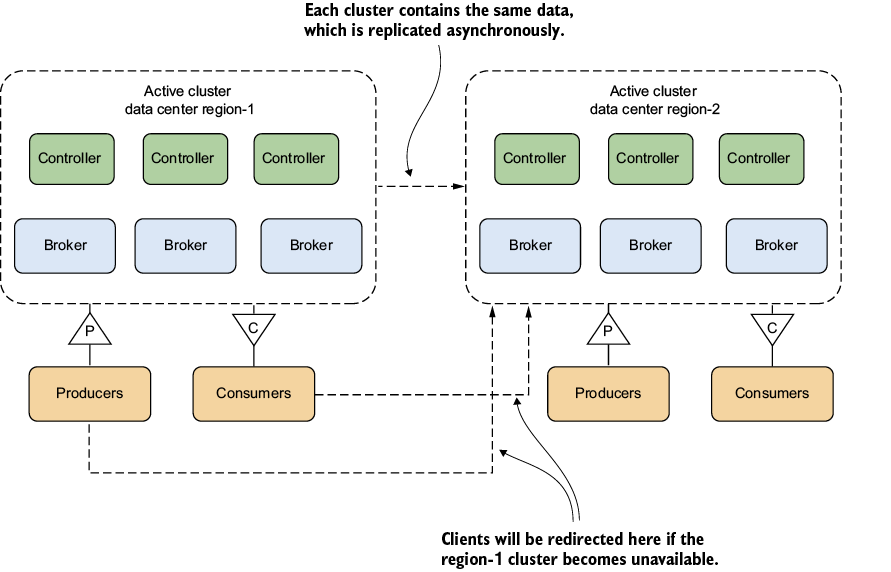
Compare the active-active architecture used to keep both data centers operational. section 11.4.1
