Custom-built is a stage of component evolution on a Wardley Map, between genesis and product. It describes a capability taking shape for a particular need while learning is increasing rapidly and consumption is growing slowly. The label is about the component’s maturity, not simply whether an organization builds it in-house: even a partly in-house cloud platform can be a commodity. section 5.3.1 section 5.2
To test a placement, ask:
- How widely is the capability used? Slowly increasing consumption points toward custom-built; rapid growth points toward product. section 5.3.1
- What is changing fastest? Rapid learning about how to construct and use the capability points toward custom-built. section 5.3.1
- How do the market and users perceive it? An emerging capability with case examples or a possible return on investment fits better than an expected, standard capability. section 5.3.1
Restaurant optimization
Advice and recommendations to help restaurants grow are being developed by only a few organizations. Features are still experimental, learning is rapid, and adoption remains limited. That suggests custom-built, but an uncertain market could place it nearer genesis. Check the judgment with domain experts rather than treating the position as settled. By contrast, restaurant menus are already a standard capability and sit near commodity. section 5.3.1
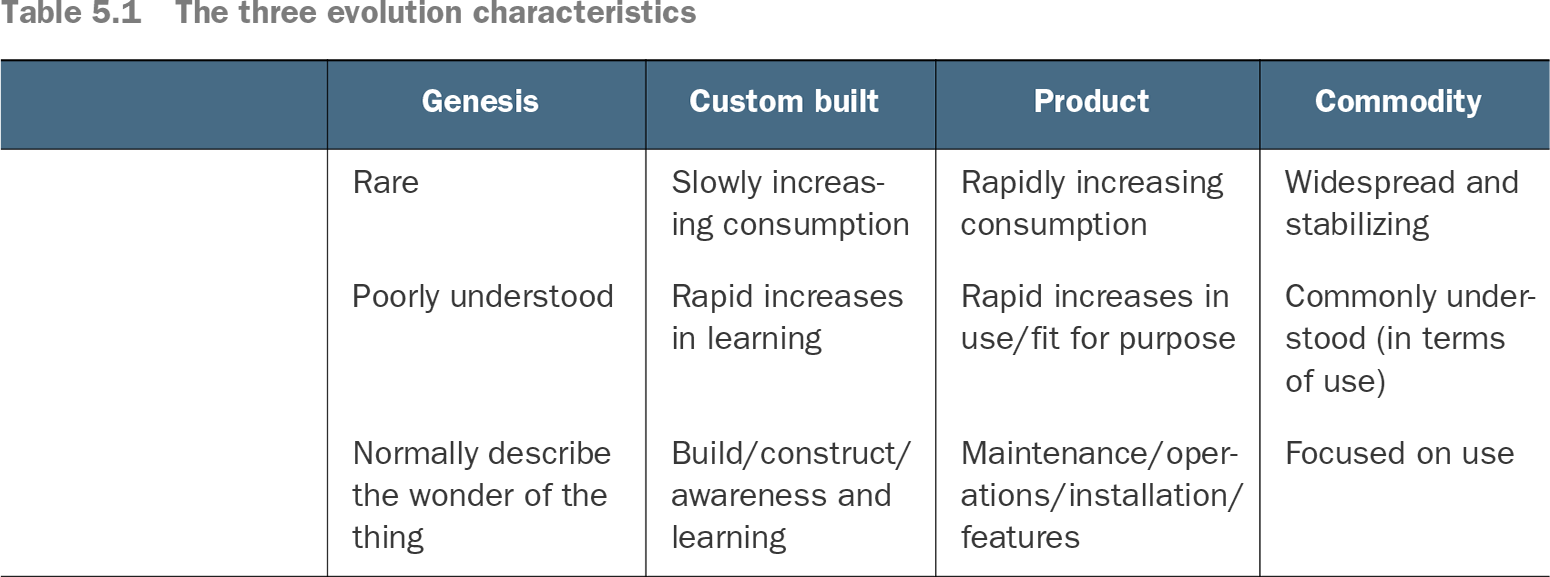
Table 5.1 The three evolution characteristics (view table figure)
Compare custom-built with adjacent stages using consumption, certainty, and the kinds of knowledge being published. section 5.3.1
In a mapping workshop, first identify users, needs, and the components in their value chains. Then place each component at the evolution stage that seems most plausible and discuss uncertain placements. Revisit the map as adoption and understanding change; the point is to expose potential strategic risks and opportunities, not to make a permanent classification. section 5.6 section 5.3.1