Customer loyalty turns a one-time transaction into a continuing relationship: customers repeatedly choose a brand because its offers, experiences, and values remain relevant. First-party data helps teams recognize preferences and interaction patterns, then use them to strengthen retention rather than treat every purchase as isolated. section 1.3.2 section 1.4.2
Loyalty-building combines several kinds of evidence:
- Behavioral and transactional signals, including logins, searches, clickstreams, content engagement, purchase history, feedback, service interactions, and loyalty-program activity, reveal what customers do. section 1.3.2
- Psychographic signals reveal deeper motivations and values, allowing brands to connect through relevant stories rather than relying only on discounts. section 1.4.2
- Engagement signals such as email opens, social interactions, click maps, and send-time responses support continuous content and campaign refinement. section 1.4.4
From vendor to trusted partner
An essentials retailer notices that parents buy diapers once and rarely return. It launches a baby registry, offers a welcome gift for useful information, and recommends age-appropriate products as children grow. The relationship evolves from a single purchase into timely support, encouraging repeat business. section 1.3.2
Values can outperform generic discounts
An eco-friendly clothing brand highlights local artisans, explains its sourcing, and invites customers to share photos. A/B testing shows that craftsmanship stories resonate more than bland discount copy, increasing repeat purchases and creating brand advocates. section 1.4.2
Figure 1.2 Overview of first-party data
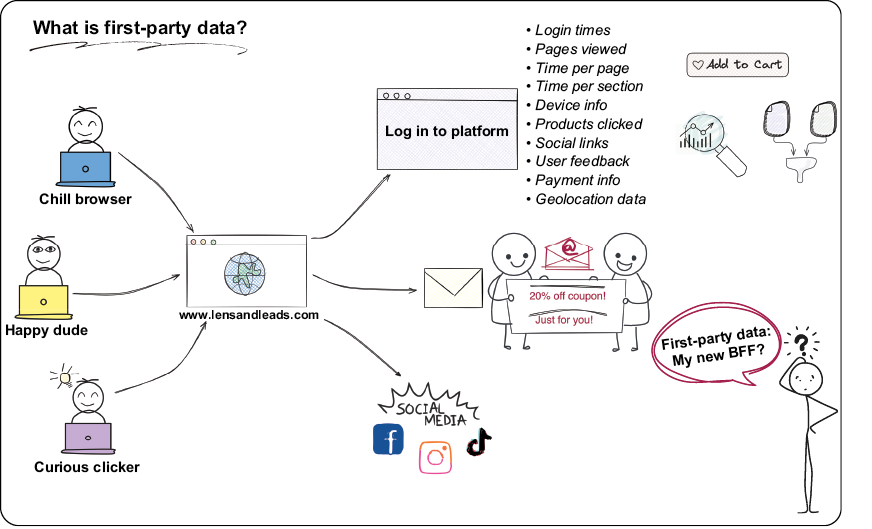
Use the first-party data overview to map how customer actions and preferences become inputs for personalized loyalty strategies. section 1.3.2
