Collected data is not automatically ready for analysis or campaigns. The data foundation layer is the central hub where sourced data is gathered, cleaned, and standardized so it can be managed and used across channels and platforms. It sits between the sourcing layer and the insights and intelligence layer in a five-layer marketing data architecture. section 2.3.2 section 2.3
Privacy must remain part of that preparation, not wait until a campaign launches:
- Use a consent management platform (CMP) to let people grant or revoke permission for distinct data-processing purposes. section 2.3.2
- Keep records of when consent was obtained, changed, or withdrawn, alongside consent versions and retention policies. section 2.3.2
- Give clear explanations of what data is collected, how it is used and shared, and with whom. section 2.3.2
Separate choices in an online store
A customer might welcome personalized product recommendations but decline marketing emails or third-party advertising. A granular CMP lets them make those choices separately rather than accept or reject every use at once. section 2.3.2
The strategic test is whether prepared data remains accurate, secure, and governed as it moves toward analysis and activation. Privacy controls across the journey protect user trust while allowing the organization to use data responsibly. section 2.3.1 section 2.3
Figure 2.4 Data foundation layer overview
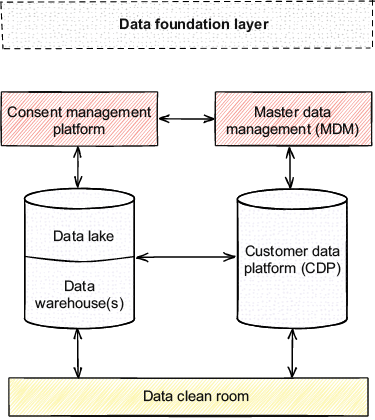
The data foundation layer overview provides a visual orientation to the components behind data preparation. section 2.3.2
