The engagement and activation layer turns insights into personalized customer experiences and coordinated marketing actions. It sits between the insights and intelligence layer and the media distribution layer, helping organizations use data across channels while preserving trust. section 2.3 section 2.3.4
Core capabilities combine customer experience technology with privacy-preserving execution:
- Personalization engines, recommendation systems, and real-time interaction management tailor messages, content, and experiences to individual preferences. section 2.3.4
- Recommendation systems can use collaborative or content-based filtering to provide relevant suggestions without collecting excessive personal data. section 2.3.4
- Customer acquisition and engagement can run across email, social media, search engines, and display advertising. section 2.3.4
- Contextual targeting, first-party data, aggregated insights, and privacy-preserving analytics reduce reliance on invasive tracking and profiling. section 2.3.4
Personalized activation with user control
A marketing team can recommend content using collaborative or content-based filtering, deliver it through email or display advertising, and evaluate results with differential privacy in A/B testing. Clear explanations of AI and data use, explicit consent where required, preference controls, and opt-out choices keep personalization aligned with privacy expectations. section 2.3.4
Figure 2.7 Engagement and activation layer overview
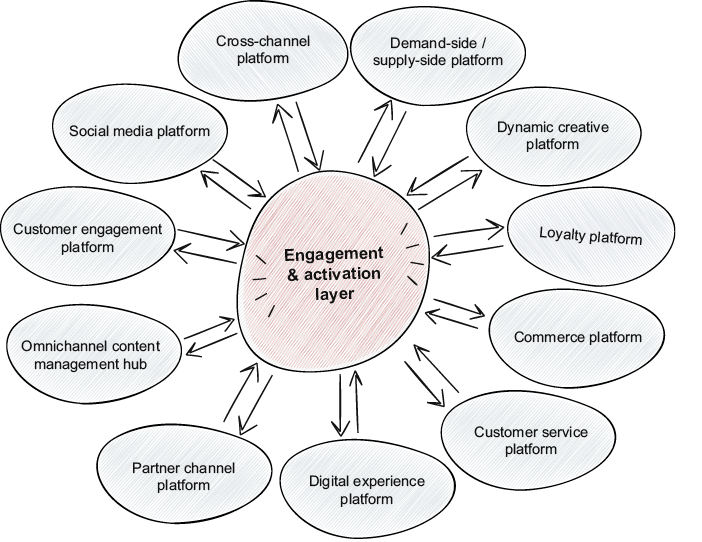
Use the layer overview to connect personalization, activation channels, and privacy-preserving measurement within the wider marketing data architecture. section 2.3.4
