A data-driven organization treats data as a valuable asset and uses systematically collected, processed, and analyzed evidence to guide decisions, operations, and strategy. It uses large-scale information about operations, stakeholders, and market context to add confidence and objectivity, especially as customer expectations for quality, speed, and personalization rise. section 9.4.2 section 4.0
Becoming data driven depends on overcoming two recurring organizational barriers:
- Improve data quality and hygiene: noisy, undocumented, siloed data prevents reliable analysis and broader business context. section 9.4.2
- Reduce access friction: employees often depend on analysts or business intelligence teams to translate business questions into SQL, Python, or R workflows, creating delays, translation errors, and interruptions to strategic data work. section 9.4.2
Predictive AI provides a foundation for activating organizational data: it structures unstructured information, classifies data, and reveals patterns or relationships that people may miss. Skipping this foundation can leave decisions dependent on static knowledge, individual experience, or gut feeling. section 4.0
Fashion recommendations and user drop-off
An e-commerce team loses track of growing user feedback and begins relying on experience. Analytics then reveals that many new users tour the site and consume recommendations but leave without filling their carts. Investigating user segments, product value, and usage evolution redirects decisions toward evidence. section 4.0
Figure 4.1 The iterative loop for delivering high-value predictive AI
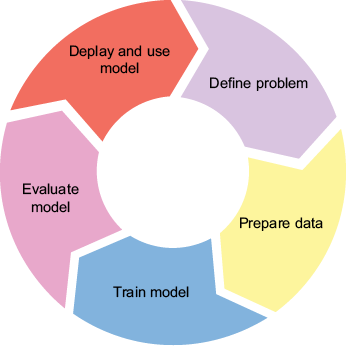
Explore the iterative loop for delivering high-value predictive AI. section 4.0
