Data infrastructure is the collection of systems, tools, and processes that gathers, stores, processes, retrieves, and presents organizational data for analysis. Its scale ranges from a shared drive with daily exports to many tools processing billions of records. section 11.2 section 11.5
A functioning infrastructure typically supports these connected activities:
- Gather information from multiple sources on a regular cadence. section 11.2
- Store structured, semistructured, or unstructured data in suitable repositories, including data warehouses, document databases, or data lakes. section 11.5
- Process and structure data through ETL or ELT before analysis or within the target warehouse. section 11.5
- Retrieve accessible, coherent data so analysts can generate insights for stakeholders and support decisions. section 11.5
Renewable-energy startup proposal
Recommend gathering, storage, and processing tools for utility usage, website activity, advertising interactions, customer tiers, and renewable-energy purchases. Compare Snowflake, MongoDB, Redshift, BigQuery, and Azure, then justify whether a data lake fits the company’s needs over the next one to two years. section 11.2.4
Figure 11.4 When data reaches your doorstep, it often looks nothing like it did at the source.
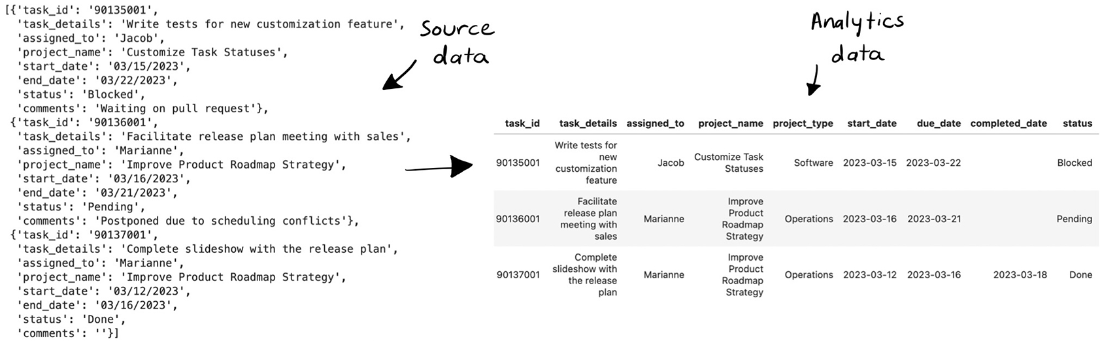
Use the figure to see how source data can change substantially before becoming an analytics resource. section 11.2

