Data loss makes intended recovery or use impossible. In Apache Iceberg deployments, it can arise from deleted objects, failed automation, hardware failure, malicious actions, or incomplete writes. External object storage provides durability and scale, but recovery depends on versioning, permissions, replication, and operational controls. section 11.3.2
Reduce exposure through layered safeguards:
- Enable object versioning, immutable storage, or object locks so deleted or overwritten data and metadata can be recovered. section 11.3.2
- Separate write, maintenance, and deletion permissions across engines, catalogs, and cloud IAM roles. section 11.3.2
- Test catalog loss, accidental deletion, storage outages, and logical errors with tailored restoration and rollback procedures. section 11.3.6
- Validate metadata, manifests, file paths, schema consistency, partition pruning, snapshot loadability, and version compatibility together. section 11.3.6
Recovering an overwritten object
With object versioning enabled, a corrupted or deleted Iceberg data or metadata file can be reverted to an earlier stored version. section 11.3.2
Figure 11.4 With object versioning, if an object is corrupted or lost, you can revert to the previous version of the object. Here, the object is a data or metadata file in storage.
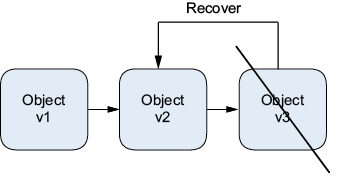
Diagram showing how object versioning enables recovery of corrupted or lost data and metadata files. section 11.3.2



