Data minimization strategy
Data minimization is the practice of collecting, processing, using, and retaining only the personal data necessary for specified purposes.
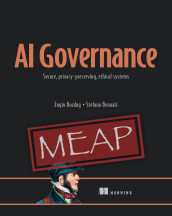
AI Governance
Data minimization is the practice of limiting personal or sensitive data collection and use to what is necessary for a defined purpose.
- How it is used
- Limits personal data entering GenAI training, retrieval, vendor services, and logs to what a defined task needs.
- How deep it goes
- Explains the necessity principle and compares practical controls across SaaS, API integration, model hosting, and RAG.
- Examples
- Uses an HR policy chatbot indexing sensitive files and AOL search logs reidentified through query details.
- What you can do after
- Operate and configure minimization controls by selecting RAG documents, sanitizing API traffic, and reviewing retention and vendor secondary use.
Read how AI Governance explains data minimization strategy →
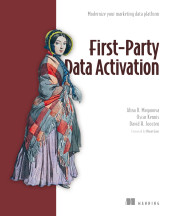
First-Party Data Activation
The practice of limiting personal-data collection and retention to what is necessary for specified purposes.
- How it is used
- Limits data collection and analysis to what specific marketing goals require.
- How deep it goes
- Defines the principle and compares privacy techniques and trade-offs, without implementation instructions.
- Examples
- Uses personalized recommendations and store-visit reporting to illustrate relevant data choices and reduced identifying detail.
- What you can do after
- Evaluate data choices against business purposes and recognize privacy and analytical trade-offs.
Read how First-Party Data Activation explains data minimization strategy →

The Art of AI Product Development
Data minimization is the practice of collecting and using no more personal or sensitive data than is necessary for a defined purpose.
- How it is used
- Limits personal and sensitive data during AI training, analytics, recommendations, and production use.
- How deep it goes
- Explains exclusion, consent, transparency, anonymization, deletion, and quality trade-offs without detailing implementation mechanics.
- Examples
- Uses clustering profiles, recommendation inputs, confidential data flows, default redaction, and secure deletion as concrete applications.
- What you can do after
- Apply it by excluding unnecessary fields, securing or anonymizing sensitive flows, obtaining consent, and deleting data after use.
Read how The Art of AI Product Development explains data minimization strategy →

Introduction to Generative AI, Second Edition
Data minimization is the practice of collecting, retaining, and processing only the personal data necessary for a specified purpose.
- How it is used
- Uses limited data collection, retention, and processing to support privacy, regulatory compliance, and safer technology design.
- How deep it goes
- Explains minimization as a principle and links it to lifecycle controls, but stops short of specifying implementation procedures or retention schedules.
- Examples
- Uses GDPR, generative AI development, ChatGPT regulatory concerns, and international privacy-law timelines as examples.
- What you can do after
- Evaluate privacy strategies by checking purpose, data necessity, lifecycle safeguards, transparency, and accountability.
Read how Introduction to Generative AI, Second Edition explains data minimization strategy →

Effective Data Analysis
Data minimization is the practice of limiting the collection, storage, and use of personal data to what is relevant and necessary for a specific purpose.
- How it is used
- Guides analysts in reducing privacy and misuse risks when collecting, retaining, accessing, and reporting sensitive data.
- How deep it goes
- Explains collection, retention, raw-data access, and identity protection with practical safeguards rather than technical implementation.
- Examples
- Uses a health-alert model, identifier-removal choices, clinical-trial reporting guardrails, and secure file-sharing practices.
- What you can do after
- Apply it by justifying collection, setting retention limits, restricting raw-data access, and selecting anonymization or pseudonymization safeguards.
Read how Effective Data Analysis explains data minimization strategy →
Also covered in
- Evaluating AI SystemsIn early access (MEAP)
- Context EngineeringIn early access (MEAP)
- Digital Twins in Action
- AI Agents for Offensive SecurityIn early access (MEAP)
What to know first
- GDPRThe General Data Protection Regulation (GDPR) is a European Union regulation governing the processing and protection of personal data and establishing related rights for individuals.
- personal dataPersonal data is information relating to an identified or identifiable individual, directly or indirectly, alone or in combination with other information.
- language modelA language model is a computational model that represents patterns in linguistic sequences to assign probabilities, predict, generate, or evaluate language.
- sensitive informationSensitive information is information whose access, disclosure, alteration, or misuse may cause harm or violate privacy, security, or confidentiality requirements.
Related concepts
- data overcollectionaddresses · Data overcollection is the acquisition or ingestion of more personal data than is necessary for a defined purpose.
- GDPRpart of · The General Data Protection Regulation (GDPR) is a European Union regulation governing the processing and protection of personal data and establishing related rights for individuals.
- privacyimplements · Privacy is the protection of information about people or other sensitive subjects from inappropriate collection, access, use, or disclosure, including control over how it is handled.
- privacy-by-designused by · Privacy by design is an approach that integrates privacy protections into the architecture, development, and operation of systems from the outset.
- compliancepart of · Compliance is conformity with applicable legal, regulatory, contractual, policy, or other governing requirements.
- context assemblyconfigures · Context assembly is the process of selecting, organizing, and combining relevant information and instructions into context for a model or other downstream processing.
Questions about data minimization strategy
What is data minimization strategy?
Data minimization is the practice of collecting, processing, using, and retaining only the personal data necessary for specified purposes.
Which Manning books explain data minimization strategy?
AI Governance, First-Party Data Activation, The Art of AI Product Development, Introduction to Generative AI, Second Edition and Effective Data Analysis.
What should I know before learning data minimization strategy?
Manning books that teach data minimization strategy usually introduce GDPR, personal data, language model and sensitive information first.
What is data minimization strategy part of?
Data minimization strategy is part of GDPR. The General Data Protection Regulation (GDPR) is a European Union regulation governing the processing and protection of personal data and establishing related rights for individuals.
These guides are generated from the text of Manning books by Manning's knowledge graph and link to the sections they draw on. The full books are available on liveBook and at manning.com.