Data organization turns raw information into clean, transformed, and usable structures. It coordinates extraction, table joins, join-key selection, data-type correction, and schema decisions so people can query data accurately and use it for operational or analytical decisions. section 11.3.1
Effective structuring typically requires teams to:
- Preserve reliable identifiers, such as a zip code, when integrating external data. section 11.3.1
- Choose whether to overwrite records or retain history with fields such as date_saved. section 11.3.1
- Add fields such as most_recent to support fast operational use, and standardize incompatible date formats. section 11.3.1
Integrating weather data
A tourism company combines National Weather Service API data with warehouse models. Saving the input zip_code creates a dependable join key, while date_saved preserves forecast history for accuracy analysis and most_recent helps operational teams find the current forecast. section 11.3.1
Figure 11.11 Structuring data in a warehouse involves ensuring it can be easily and accurately queried.
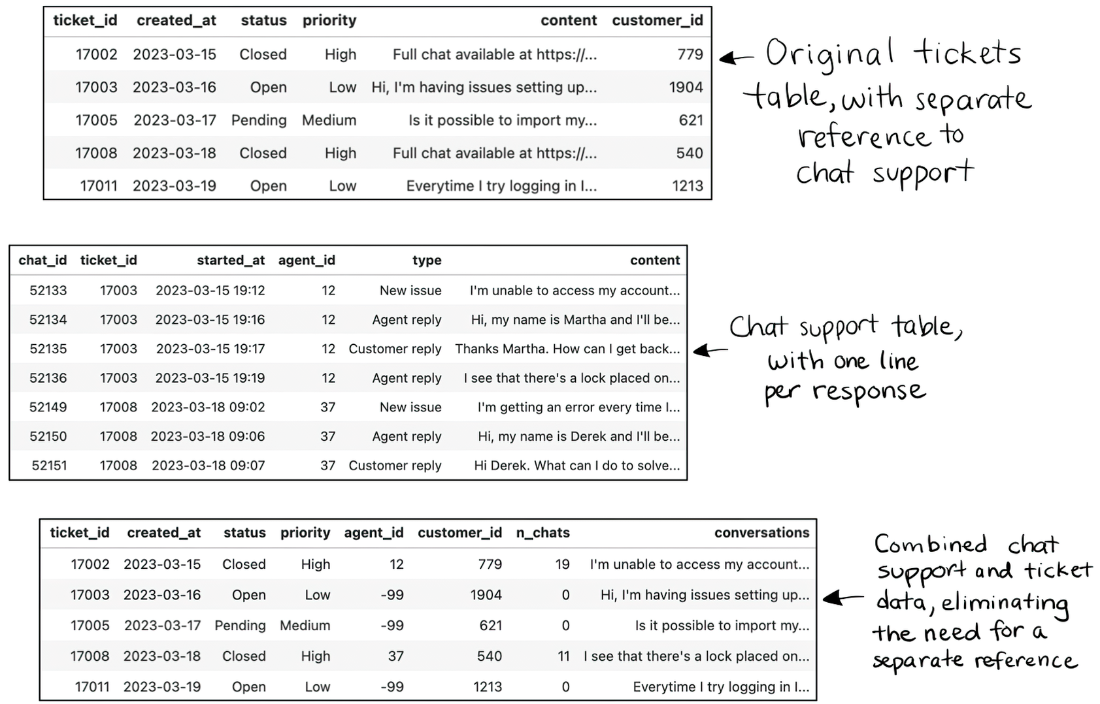
Use the figure to see how warehouse structure supports accurate, accessible queries. section 11.3.1
