A data science project transforms raw data through coordinated stages into analyses, models, and business decisions. It begins with a concise, clear, measurable, achievable business problem. section 1.4
A practical workflow includes:
- Define the business problem and measurable target. section 1.4
- Discover, access, and organize relevant data sources and tables. section 1.4
- Preprocess data by addressing null values, outliers, duplicates, and junk values. section 1.4
- Explore the data, produce initial reports and insights, and discuss findings with stakeholders. section 1.4
- Test multiple modeling solution versions after the data is prepared. section 1.4
Turning vague goals into measurable problems
Replace “increase production” with a target such as optimizing cost heads A, B, C, and D to reduce cost by 1.2% in six months. For defects, identify significant factors X, Y, and Z to reduce defect percentage by 1.8% in three months. section 1.4
Figure 1.9 A data science project is like any other project, having stages and deadlines, dependencies, and processes.
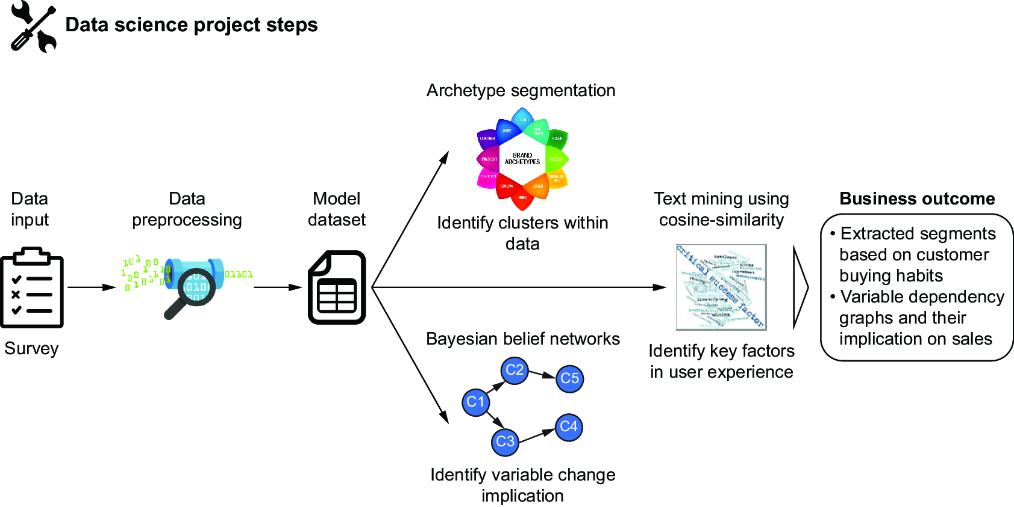
Use the lifecycle diagram to navigate the project’s stages, deadlines, dependencies, and processes. section 1.4
